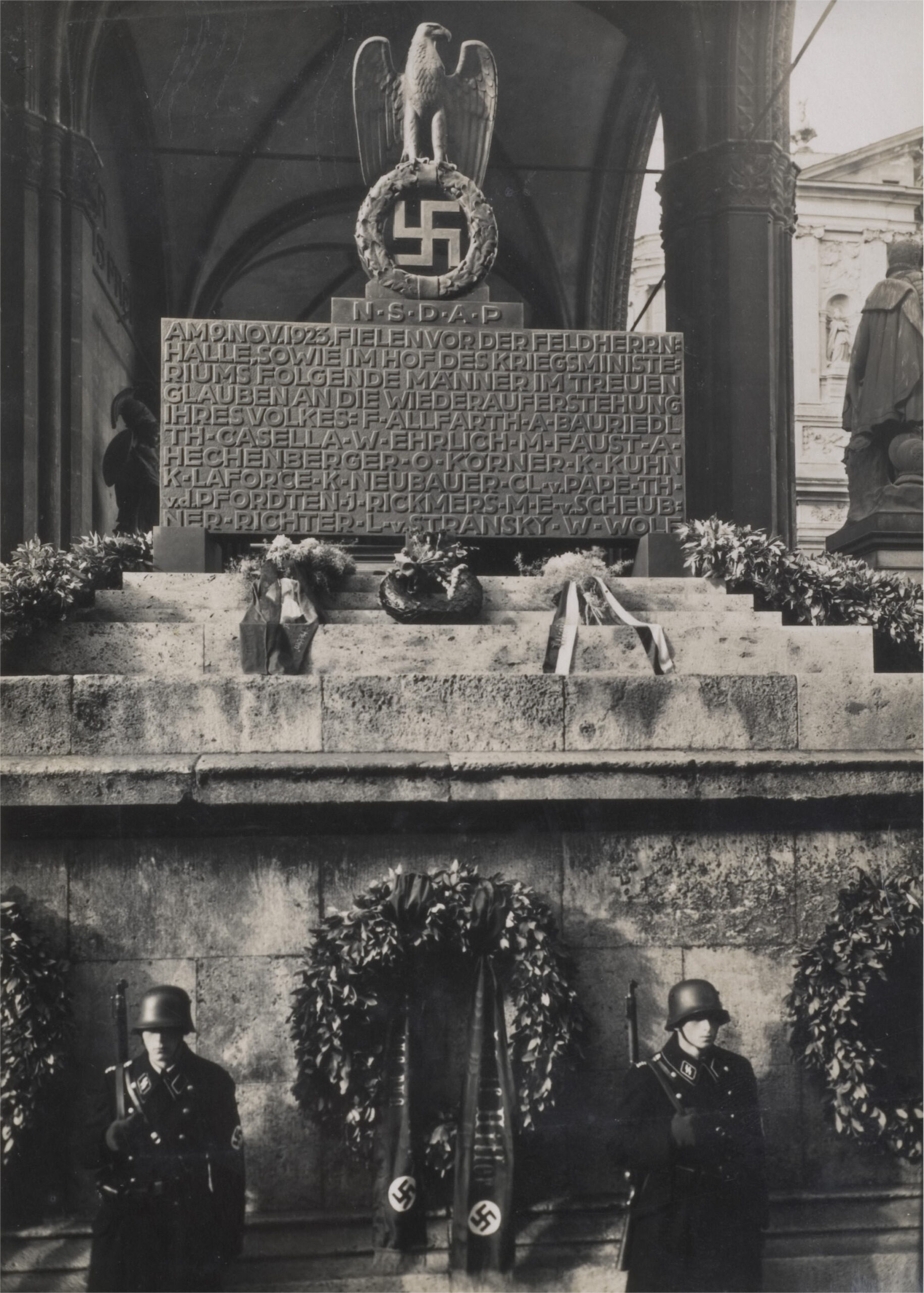
Feldherrnhalle Mahnmal Bronze
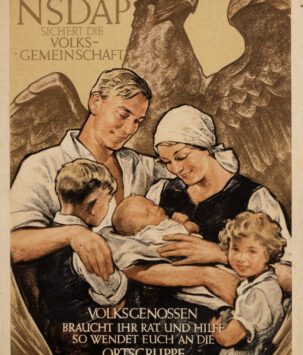
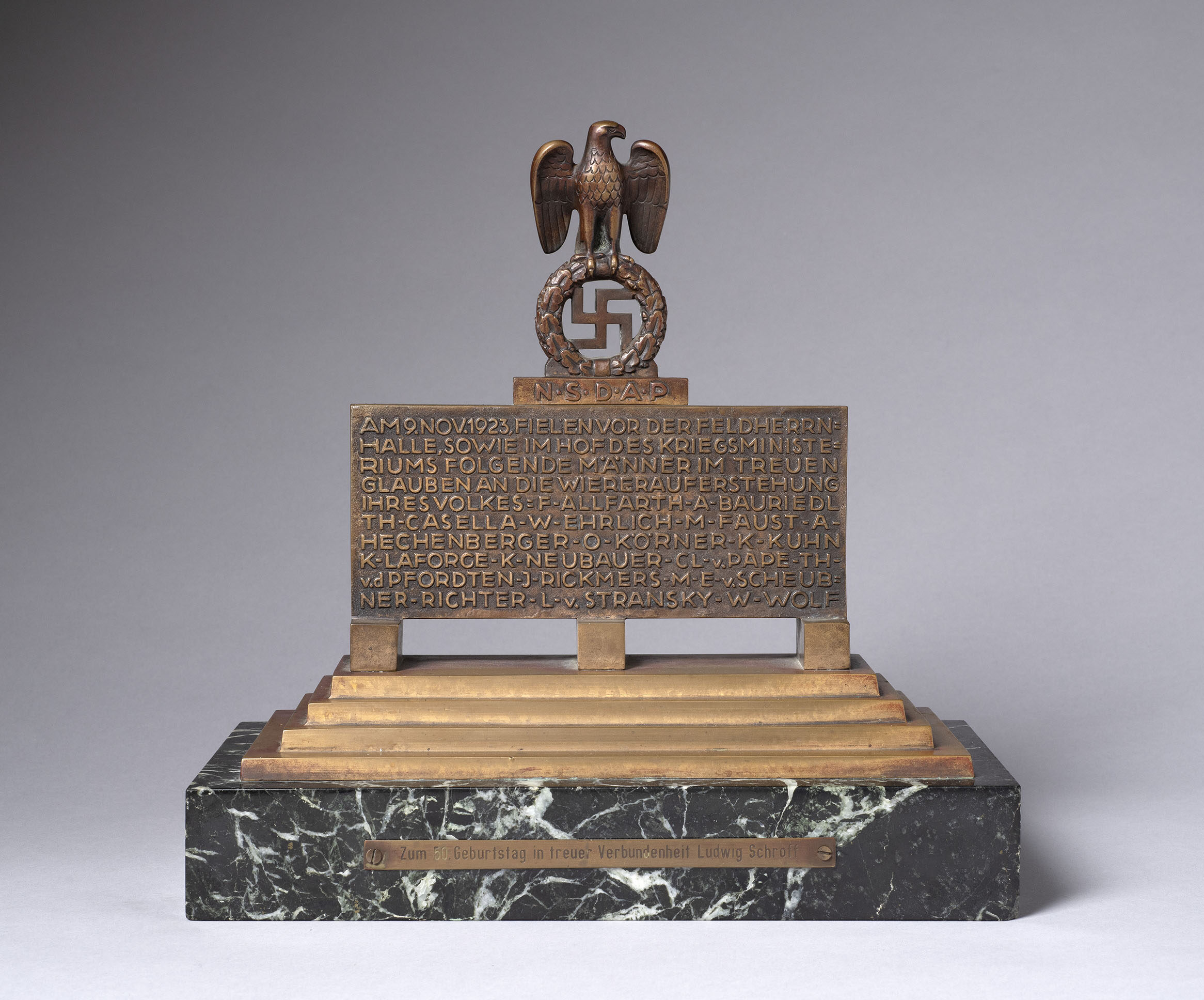
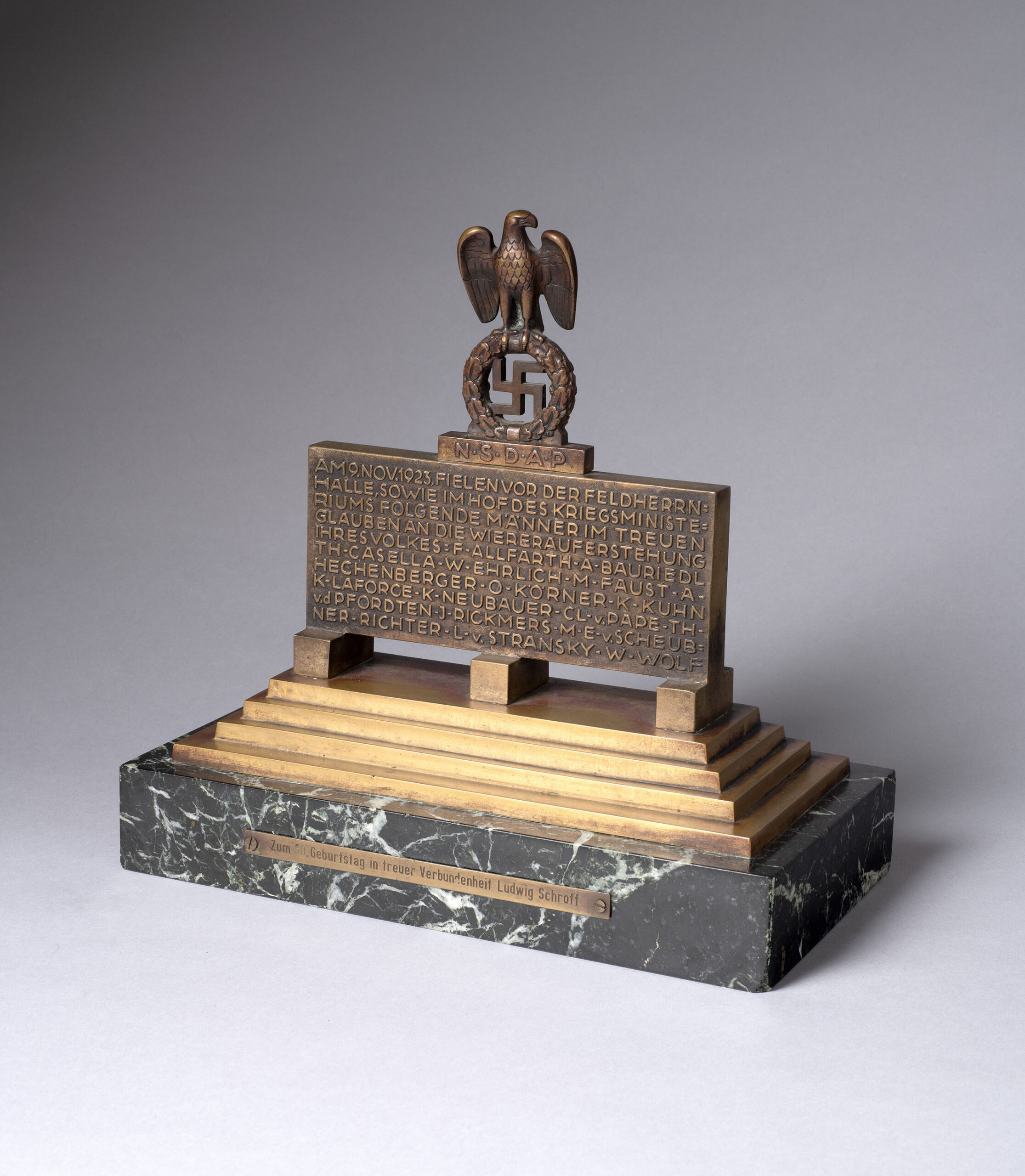
The Mahnmal der Bewegung (Memorial to the Movement) was a memorial designed by Paul Ludwig Troost, Hitler’s foremost architect, whose neoclassical style served as the official architecture of the Third Reich. This one-of-a-kind, 1:10 scale bronze was manufactured by Jeweler Biwus & Burkhard of Augsburg, commissioned as a gift to Ludwig Schroff for his 50th birthday. The Schroff family were printers from Augsburg who were responsible for printing various propaganda posters including Hitler’s campaign poster Nur Hitler and The NSDAP Secures the Volksgemeinschaft.
The monument is a homage to sacrifice, bravery, martyrdom and duty, central tenets within the National Socialist ethos. The monument once stood in the Feldherrnhalle (Field Marshals’ Hall) in Munich, site of the Beer Hall Putsch of November 9th, 1923. Two Ehrentempel (Temples of Honor) were consecrated in its vicinity to entomb the sixteen martyrs of the Putsch, while also sanctifying those who were expected to fall in the future struggle for Germany. By linking the memory of the Putsch with the ideal of future devotion to the movement, this monument sought to reinforce a cultural readiness for self-sacrifice in service to the national community and encourage acts of selflessness as a civic virtue. Inspired by Mussolini’s March on Rome, the Munich Beer Hall Putsch was an early attempt by the National Socialists to overthrow the Weimar Republic, which was widely viewed as decadent, ineffective and corrupt. The failed coup saw the deaths of sixteen partaking party members whose martyrdom was sanctified as part of the National Socialist mythos. The 9th of November was declared a national holiday in 1933 and was considered one of the most important dates on the Third Reich’s calendar.
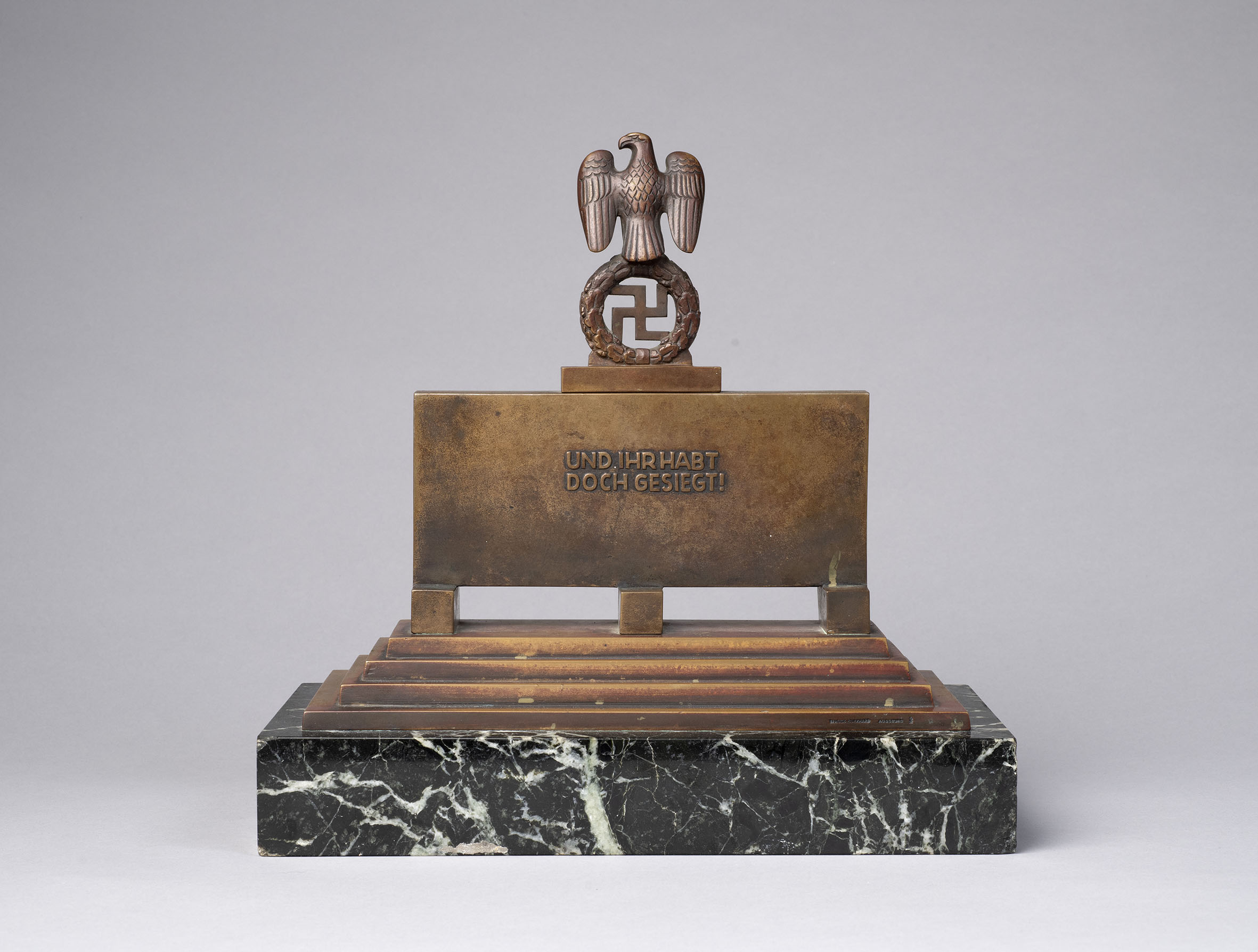
The face of the monument (translated to English) reads: On the 9th of November 1923, the following men fell in front of the Field Marshalls’ Hall and in the courtyard of the Ministry of War, faithfully believing in the resurrection of their people, followed by the names of the sixteen participants who gave their lives on that fateful day. The reverse reads Und ihr habt doch gesiegt! (And yet you triumphed!), celebrating the eventual electoral success of National Socialism through the sacrifices of its adherents.
The monument naturally held great significance in Nazi Germany, being under perpetual ceremonial guard by the Schutzstaffel (SS) and used for parades and commemorative rallies alike. In both function and significance, the Mahnmal can be considered to parallel the ‘Tomb of the Unknown Soldier’ of the United States and Russia. New SS recruits were known to take their oaths of loyalty to Hitler in front of the memorial in the hopes that they would fulfill their duties to the fullest with the same spirit of selfless loyalty to one’s community, just as embodied by the sixteen martyrs of November 9th.
With the original memorial demolished during the Allied ‘denazification’ of Germany, this bronze survives as one of the last tangible reminders of the site, and of the enduring ideal of selfless devotion to one’s duty as embodied by the putschists.
Free shipping on orders over $50!
- Satisfaction Guaranteed
- No Hassle Refunds
- Secure Payments
The Mahnmal der Bewegung (Memorial to the Movement) was a memorial designed by Paul Ludwig Troost, Hitler’s foremost architect, whose neoclassical style served as the official architecture of the Third Reich. This one-of-a-kind, 1:10 scale bronze was manufactured by Jeweler Biwus & Burkhard of Augsburg, commissioned as a gift to Ludwig Schroff for his 50th birthday. The Schroff family were printers from Augsburg who were responsible for printing various propaganda posters including Hitler’s campaign poster Nur Hitler and The NSDAP Secures the Volksgemeinschaft.
The monument is a homage to sacrifice, bravery, martyrdom and duty, central tenets within the National Socialist ethos. The monument once stood in the Feldherrnhalle (Field Marshals’ Hall) in Munich, site of the Beer Hall Putsch of November 9th, 1923. Two Ehrentempel (Temples of Honor) were consecrated in its vicinity to entomb the sixteen martyrs of the Putsch, while also sanctifying those who were expected to fall in the future struggle for Germany. By linking the memory of the Putsch with the ideal of future devotion to the movement, this monument sought to reinforce a cultural readiness for self-sacrifice in service to the national community and encourage acts of selflessness as a civic virtue. Inspired by Mussolini’s March on Rome, the Munich Beer Hall Putsch was an early attempt by the National Socialists to overthrow the Weimar Republic, which was widely viewed as decadent, ineffective and corrupt. The failed coup saw the deaths of sixteen partaking party members whose martyrdom was sanctified as part of the National Socialist mythos. The 9th of November was declared a national holiday in 1933 and was considered one of the most important dates on the Third Reich’s calendar.
The face of the monument (translated to English) reads: On the 9th of November 1923, the following men fell in front of the Field Marshalls’ Hall and in the courtyard of the Ministry of War, faithfully believing in the resurrection of their people, followed by the names of the sixteen participants who gave their lives on that fateful day. The reverse reads Und ihr habt doch gesiegt! (And yet you triumphed!), celebrating the eventual electoral success of National Socialism through the sacrifices of its adherents.
The monument naturally held great significance in Nazi Germany, being under perpetual ceremonial guard by the Schutzstaffel (SS) and used for parades and commemorative rallies alike. In both function and significance, the Mahnmal can be considered to parallel the ‘Tomb of the Unknown Soldier’ of the United States and Russia. New SS recruits were known to take their oaths of loyalty to Hitler in front of the memorial in the hopes that they would fulfill their duties to the fullest with the same spirit of selfless loyalty to one’s community, just as embodied by the sixteen martyrs of November 9th.
With the original memorial demolished during the Allied ‘denazification’ of Germany, this bronze survives as one of the last tangible reminders of the site, and of the enduring ideal of selfless devotion to one’s duty as embodied by the putschists.