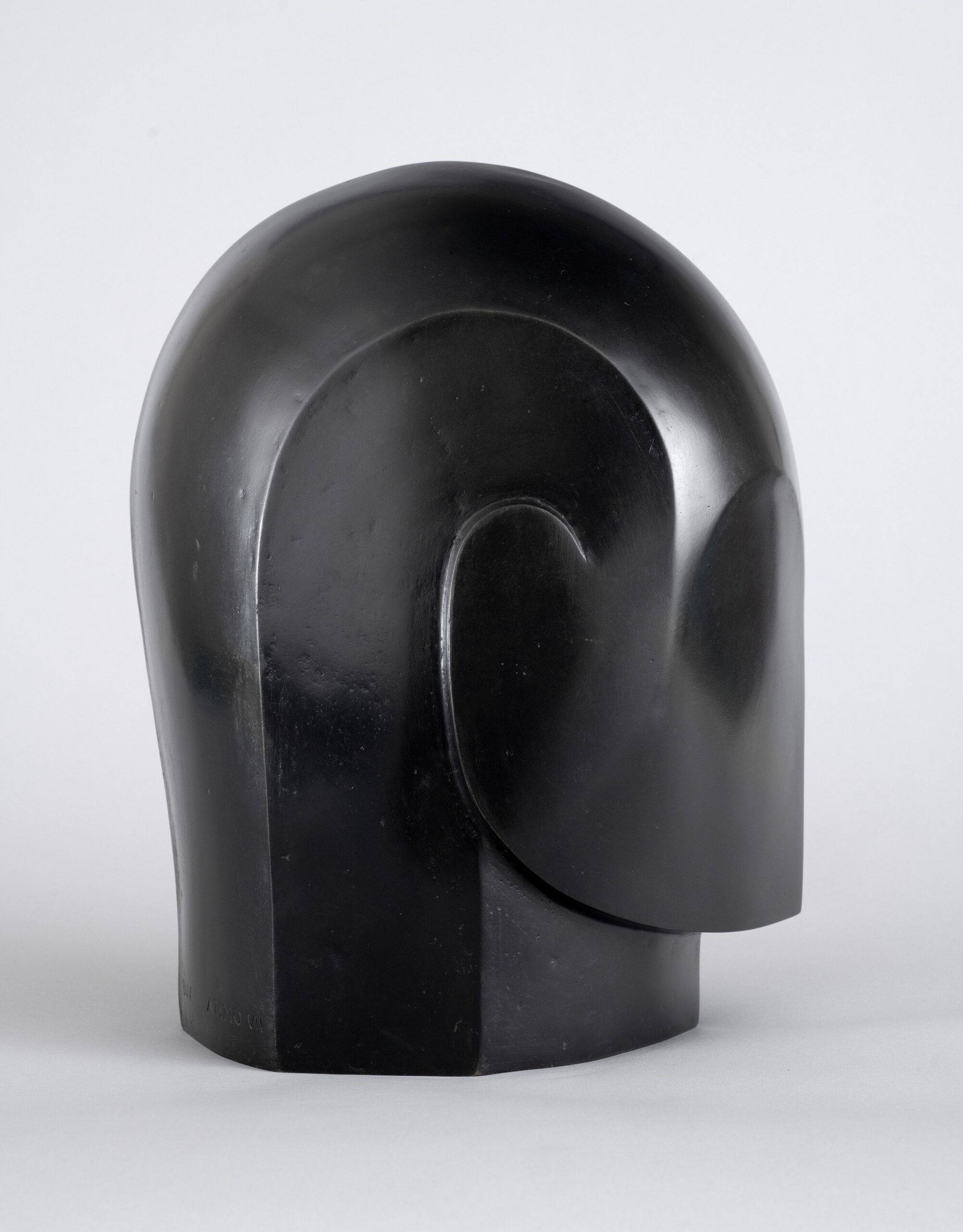
Condottiero
Artist: Thayaht
Origin: Italy, 1929
Dimensions: 32 x 21 x 24 cm
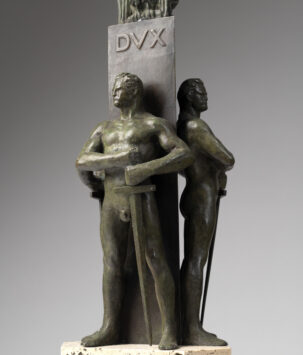
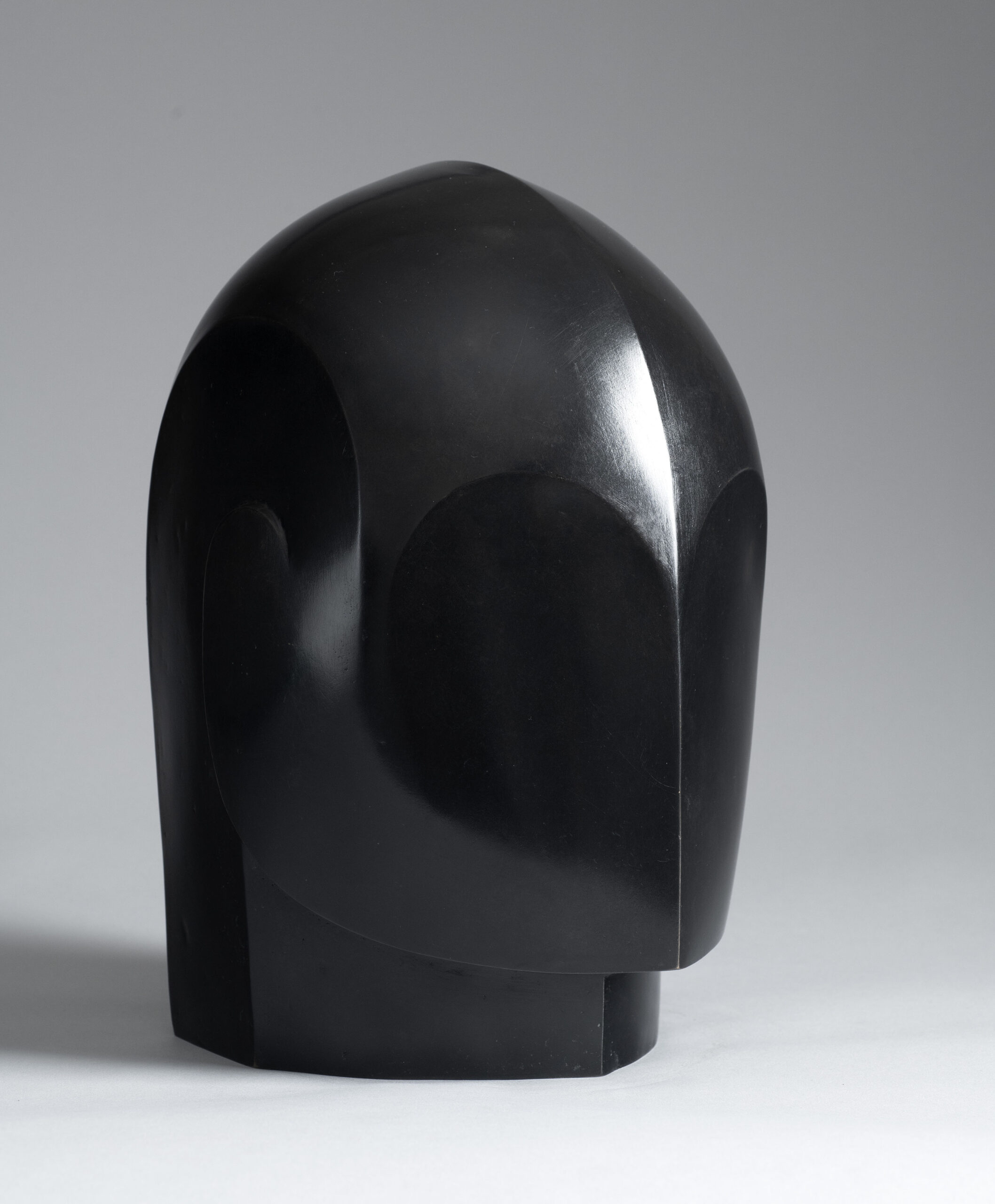
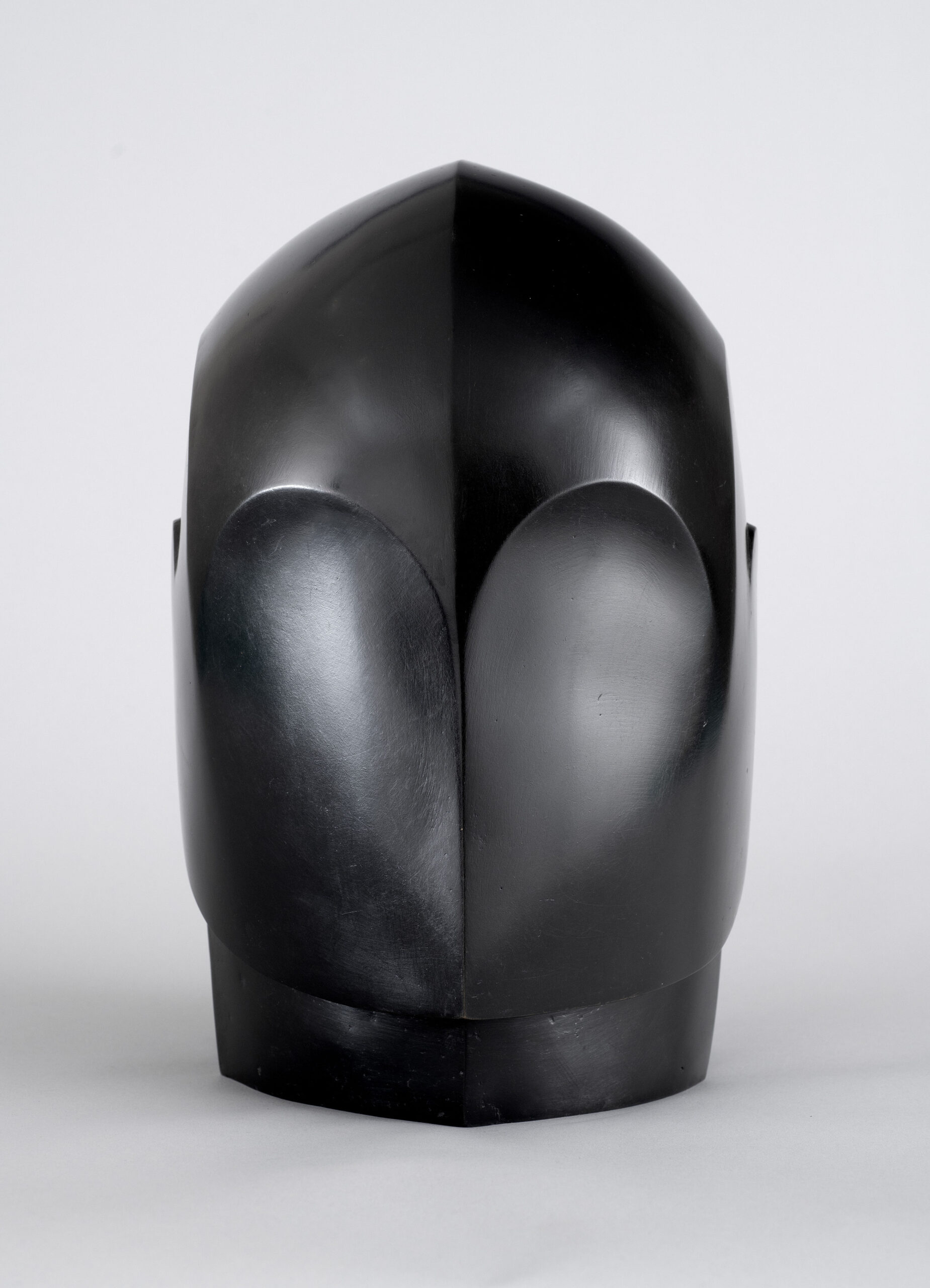
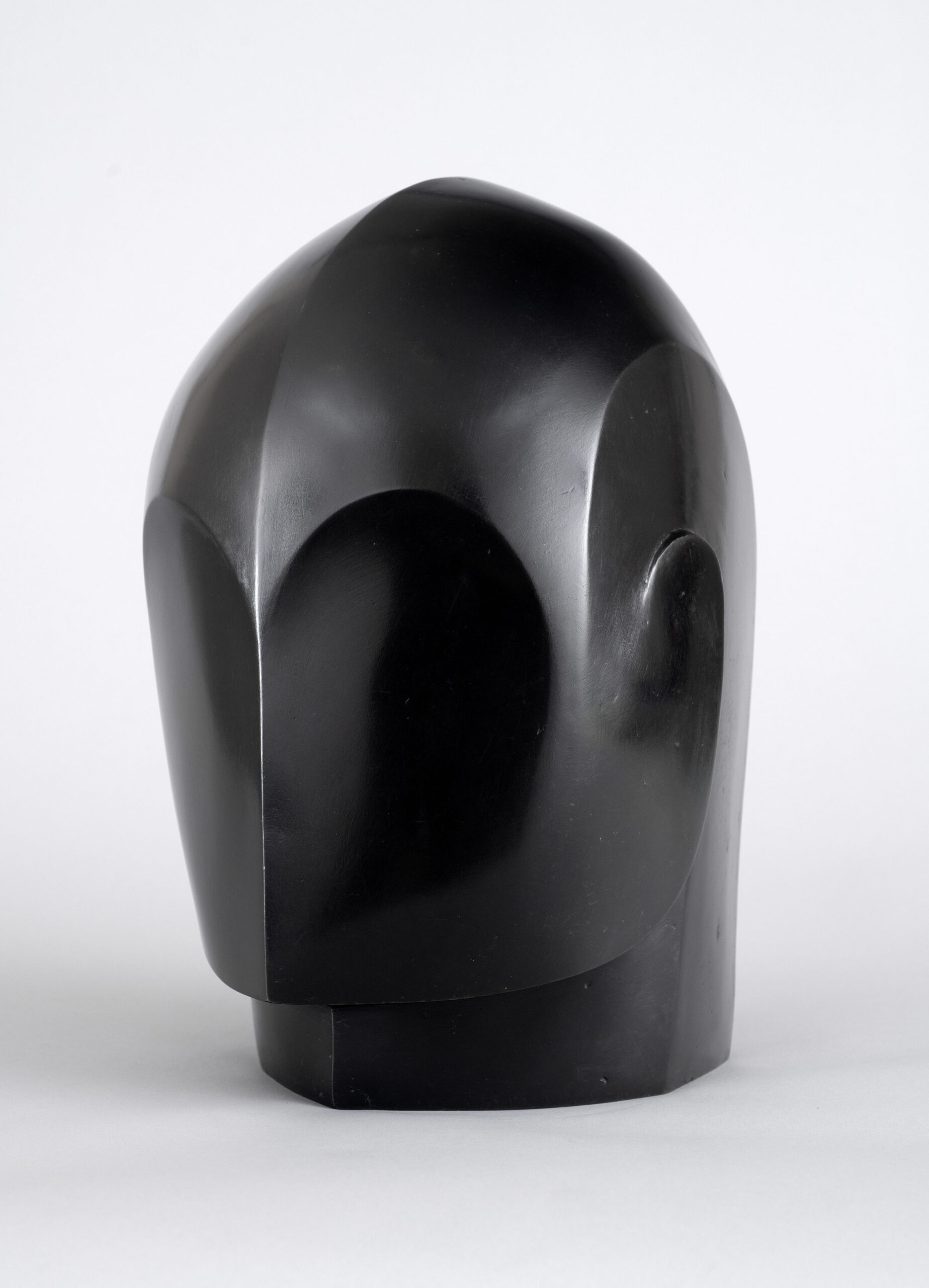
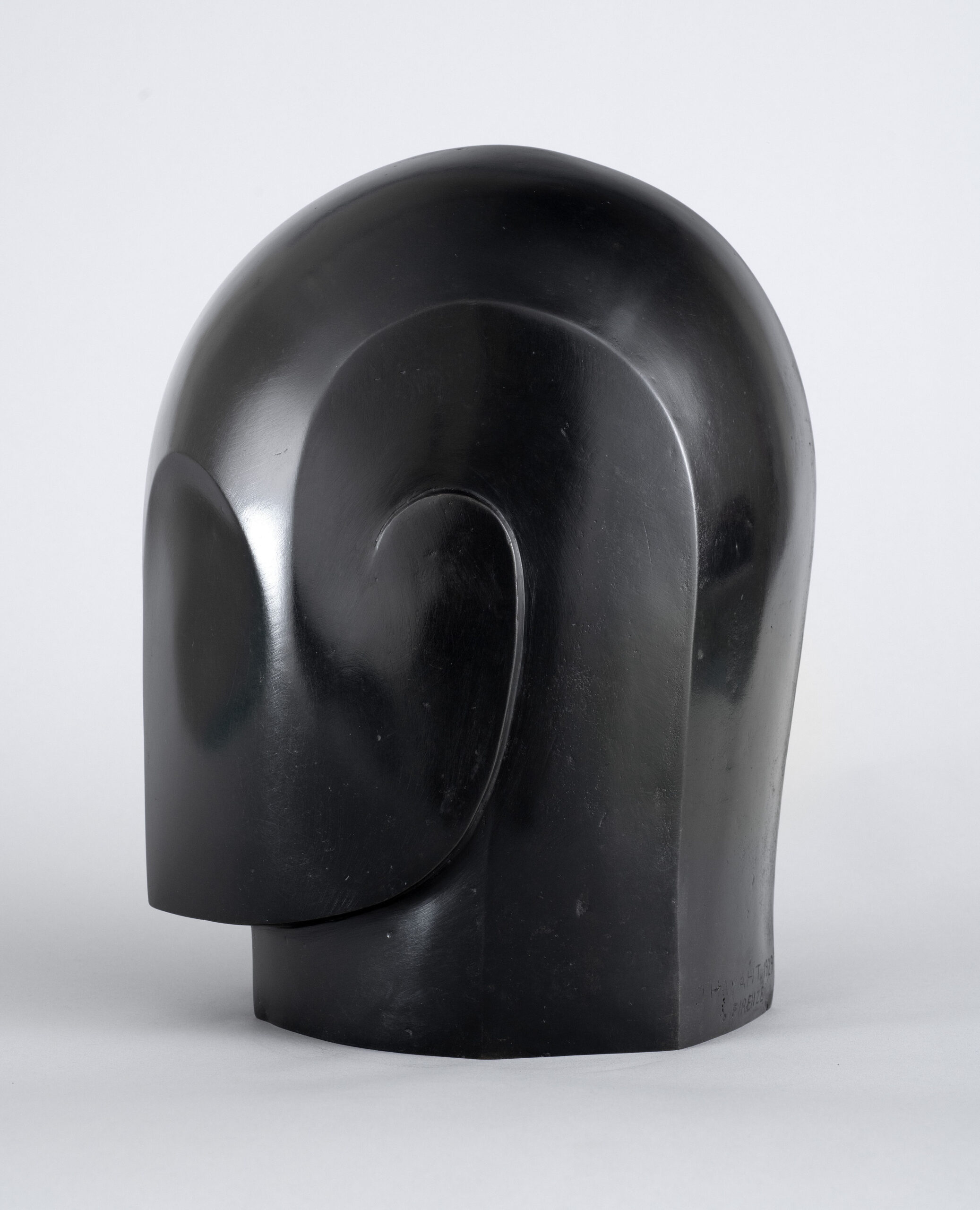
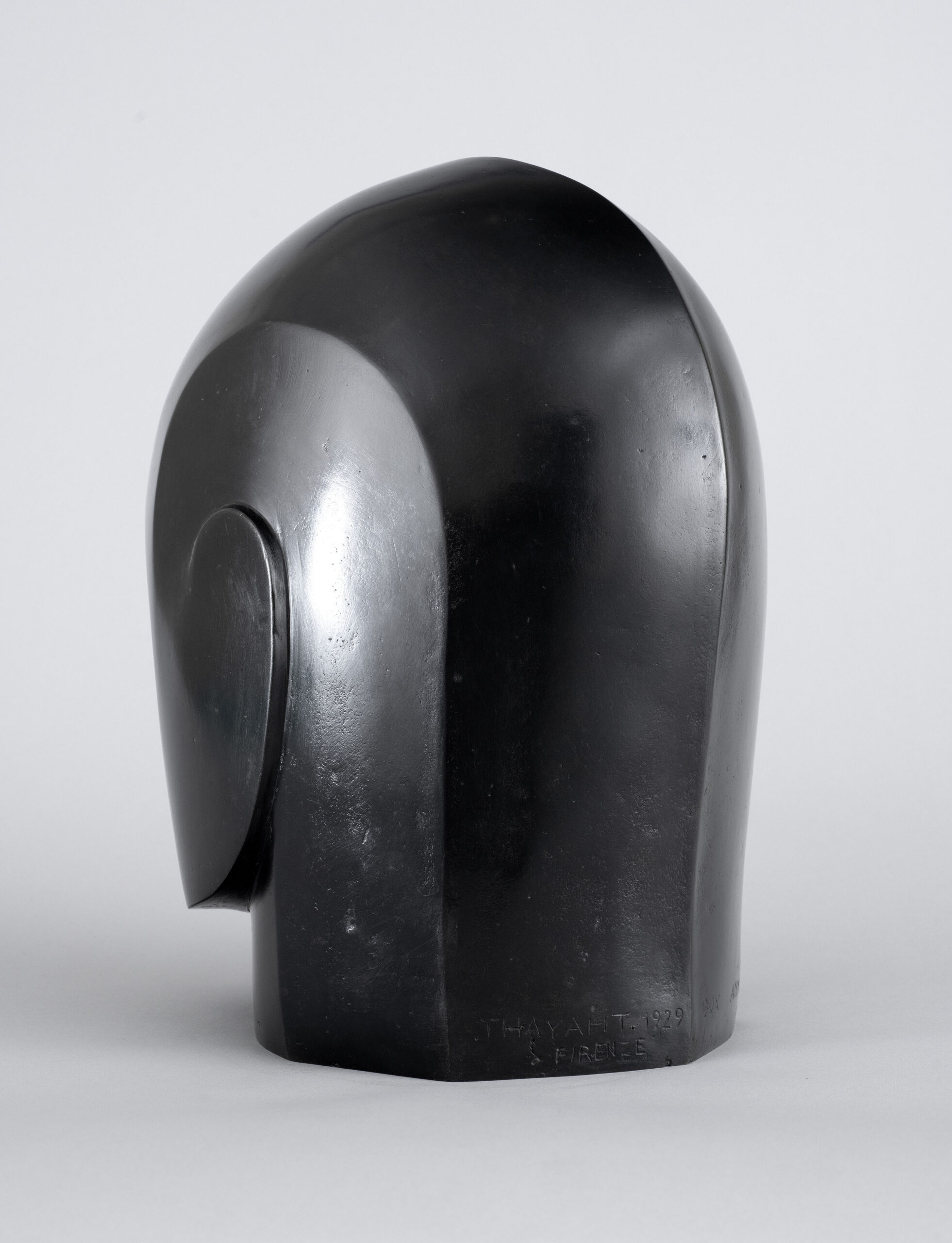
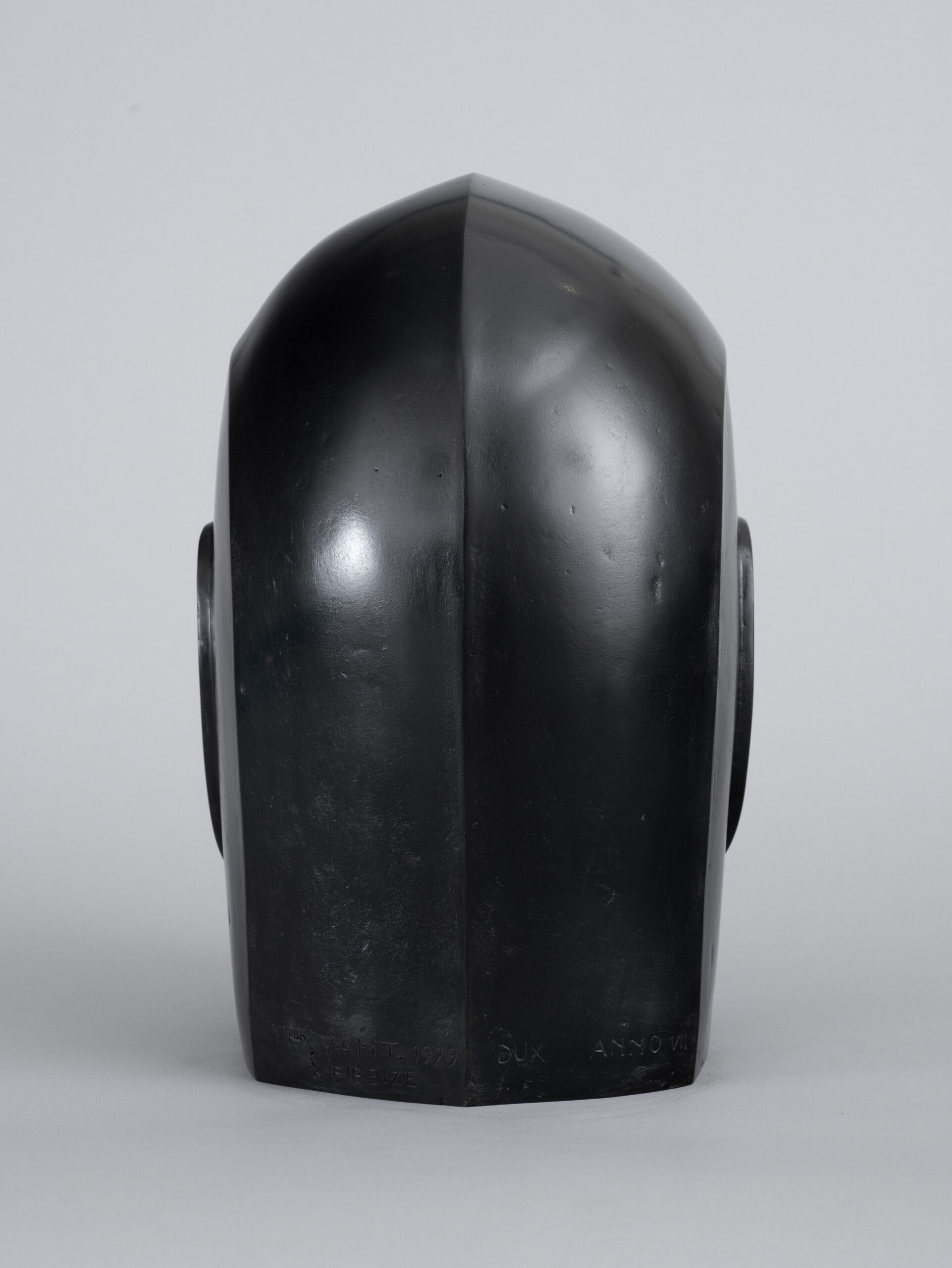
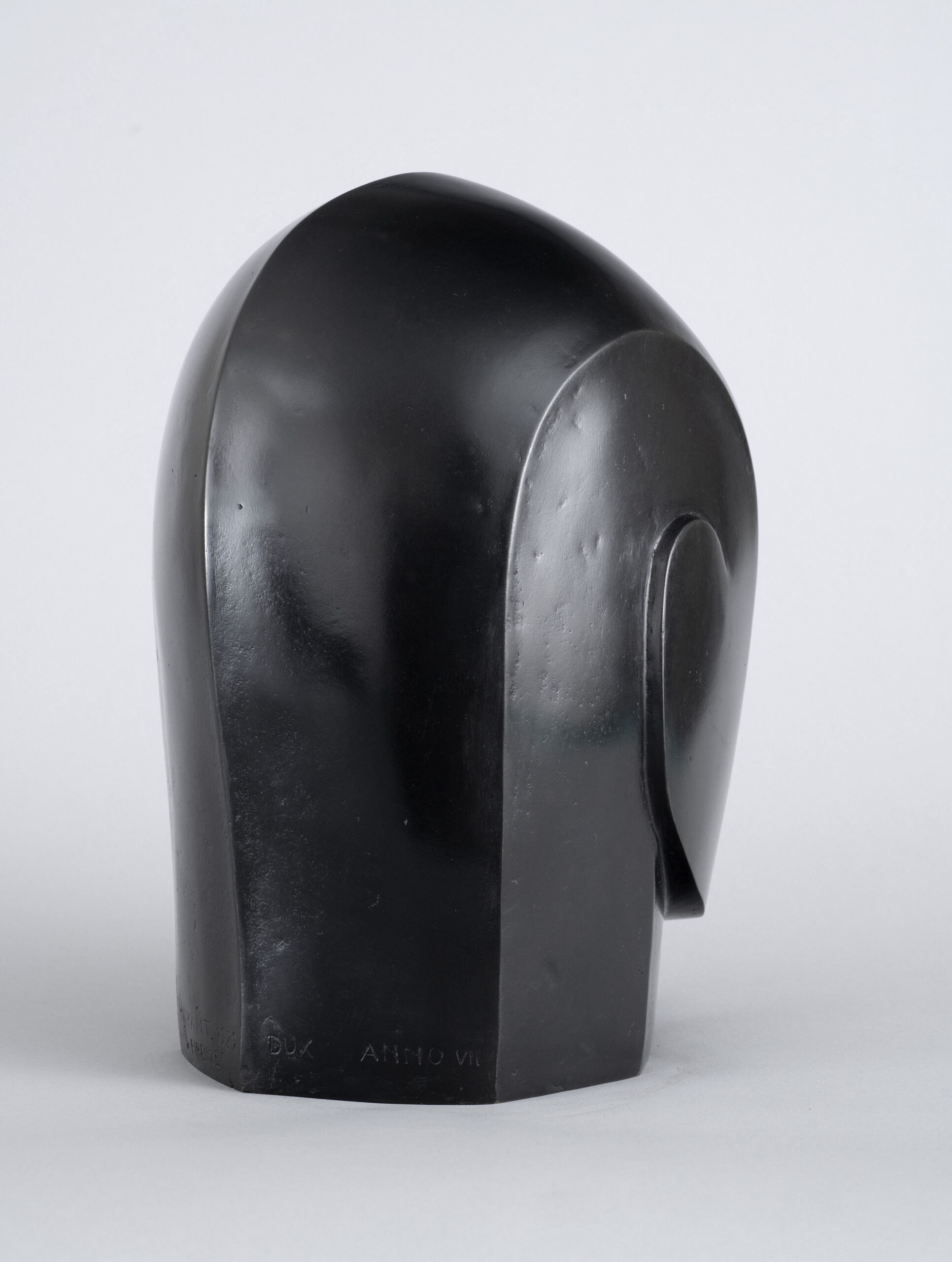
A Futurist interpretation of a medieval condottiero (mercenary commander) wearing a barbute. Also known as Dux con pietra miliare, the sculpture is an impressionistic portrayal of Benito Mussolini as an idealized knightly warrior.
Thataht’s first work associated with Fascism, Condottiero embodies the ideology’s core values: the mythology of a glorious, knightly past and its essence that lives on in a futuristic reality. While the unmistakable silhouette of a medieval helmet connects Mussolini to Italy’s chivalric tradition, its uninterrupted lines and polished surfaces project an air of modernity and futurism. This dematerialized abstraction also conveys stability, permanence and authority, depicting the Duce, Benito Mussolini, as an ideological archetype rather than as an individual.
Condottiero exemplifies the stylistic diversity permitted within Fascist Italy, where artists were free to draw from both classical and avant-garde traditions provided their work conveyed the regime’s ideological messaging. In doing so, these works came to embody a central theme of Fascist ideology: the fusion of a nation’s mythic past with its revolutionary future.
Free shipping on orders over $50!
- Satisfaction Guaranteed
- No Hassle Refunds
- Secure Payments
Artist: Thayaht
Origin: Italy, 1929
Dimensions: 32 x 21 x 24 cm
A Futurist interpretation of a medieval condottiero (mercenary commander) wearing a barbute. Also known as Dux con pietra miliare, the sculpture is an impressionistic portrayal of Benito Mussolini as an idealized knightly warrior.
Thataht’s first work associated with Fascism, Condottiero embodies the ideology’s core values: the mythology of a glorious, knightly past and its essence that lives on in a futuristic reality. While the unmistakable silhouette of a medieval helmet connects Mussolini to Italy’s chivalric tradition, its uninterrupted lines and polished surfaces project an air of modernity and futurism. This dematerialized abstraction also conveys stability, permanence and authority, depicting the Duce, Benito Mussolini, as an ideological archetype rather than as an individual.
Condottiero exemplifies the stylistic diversity permitted within Fascist Italy, where artists were free to draw from both classical and avant-garde traditions provided their work conveyed the regime’s ideological messaging. In doing so, these works came to embody a central theme of Fascist ideology: the fusion of a nation’s mythic past with its revolutionary future.