

Imperial Japanese Army Aviator Gear
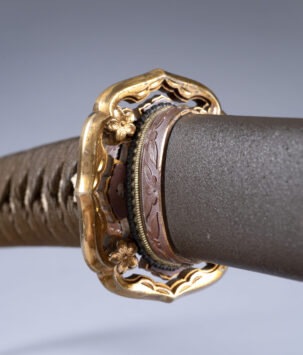
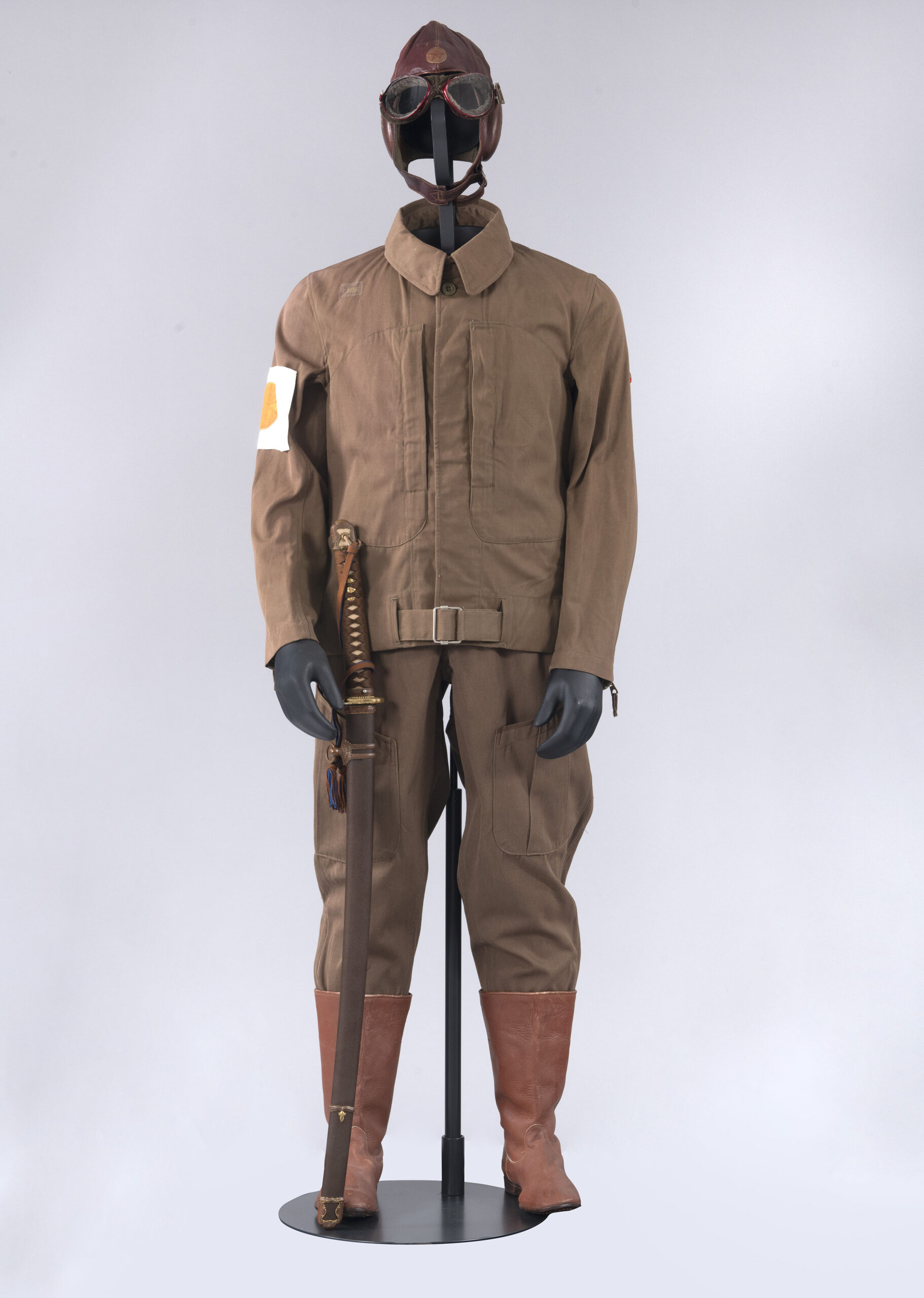
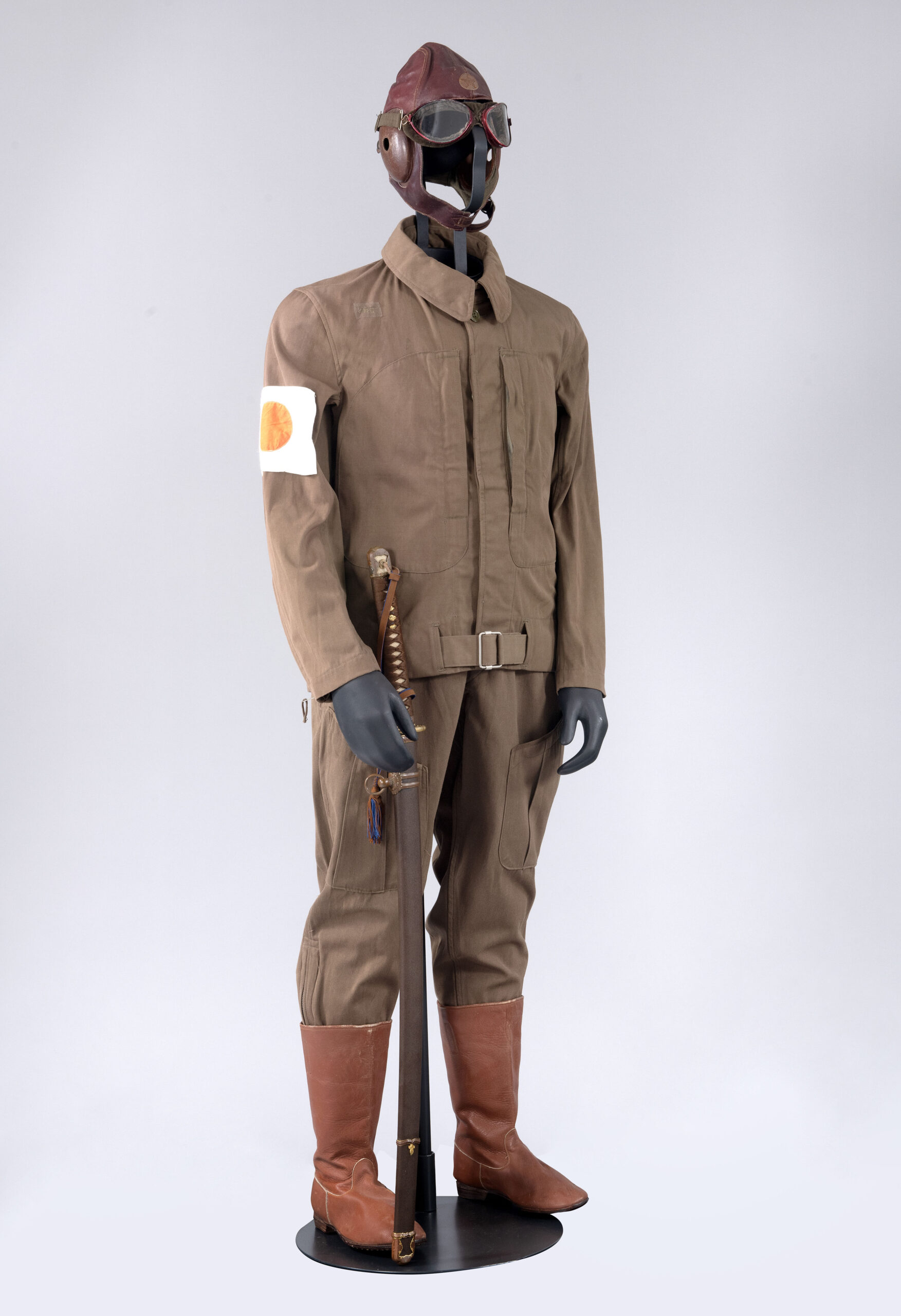
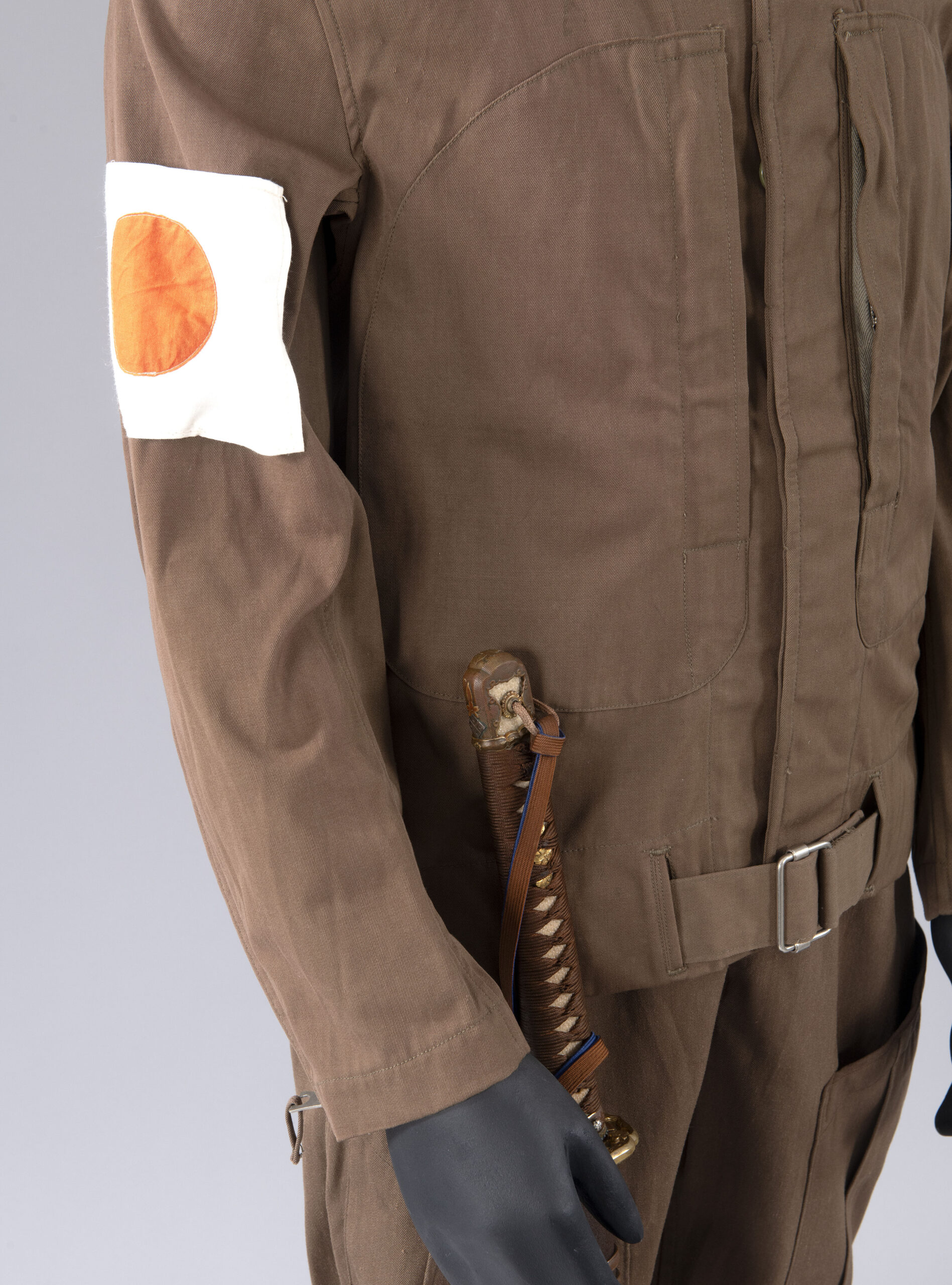
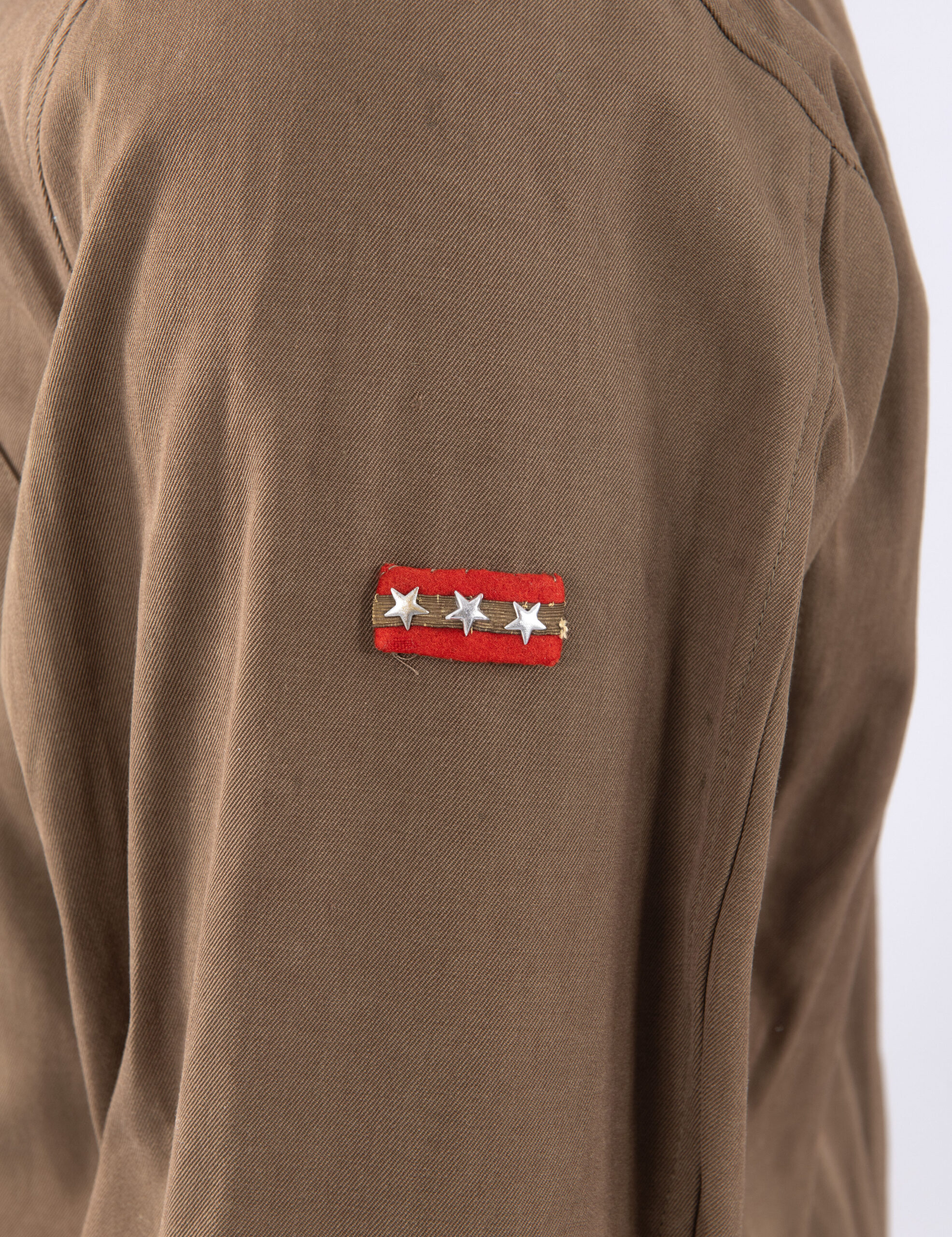
Flight gear of a Sergeant Major in the Imperial Japanese Army Air Force. In the 1930’s, right-wing militarists within the armed forces of Japan pushed for the adoption of traditional katanas to replace Western-style sabres for their officers to inspire troop morale by invoking the imagery of the revered samurai warriors of yore. The flight gear is paired (in the first 3 images) with a Type 98 military-issue katana (shin-guntō), which worn into battle by kamikaze pilots as they embarked on their final attacks. Kamikaze (Divine Wind) squadrons were formed exclusively of volunteers, with men as young 17 years old partaking in these suicide missions, inspired by a sense of duty and patriotic fervor.
In pre-war Japan, death in the service of the emperor was sacralized as both an honor and a divinely mandated duty. The youth were inculcated in the spirit of bushido, Japan’s ancient warrior code. A principal teaching within bushido concerned death; it stipulated that only by fully accepting one’s mortality can an individual attain self-actualization in life. The kamikaze operations were the crystallization of these pre-war cultural attitudes surrounding honor-bound duty and a death-defying martial spirituality.
“This was also the attitude of the kamikaze pilots, who in the Second World War drove their explosive-laden airplanes onto enemy ships of war…this is the essence of heroism itself. Fear of death does not prevent the hero from doing what has to be done.” — Francis Parker Yockey, Imperium (1948)
This readiness to sacrifice one’s life and a mentality of “death before dishonor” is repeated throughout the entire Pacific theatre of the war, with not a single organized unit of the Imperial Japanese Army surrendering (many choosing to opt for suicidal charges when the military situation was hopeless) between 1937 and 1945 – an unprecedented feat in the annals of warfare.
Free shipping on orders over $50!
- Satisfaction Guaranteed
- No Hassle Refunds
- Secure Payments
Flight gear of a Sergeant Major in the Imperial Japanese Army Air Force. In the 1930’s, right-wing militarists within the armed forces of Japan pushed for the adoption of traditional katanas to replace Western-style sabres for their officers to inspire troop morale by invoking the imagery of the revered samurai warriors of yore. The flight gear is paired (in the first 3 images) with a Type 98 military-issue katana (shin-guntō), which worn into battle by kamikaze pilots as they embarked on their final attacks. Kamikaze (Divine Wind) squadrons were formed exclusively of volunteers, with men as young 17 years old partaking in these suicide missions, inspired by a sense of duty and patriotic fervor.
In pre-war Japan, death in the service of the emperor was sacralized as both an honor and a divinely mandated duty. The youth were inculcated in the spirit of bushido, Japan’s ancient warrior code. A principal teaching within bushido concerned death; it stipulated that only by fully accepting one’s mortality can an individual attain self-actualization in life. The kamikaze operations were the crystallization of these pre-war cultural attitudes surrounding honor-bound duty and a death-defying martial spirituality.
“This was also the attitude of the kamikaze pilots, who in the Second World War drove their explosive-laden airplanes onto enemy ships of war…this is the essence of heroism itself. Fear of death does not prevent the hero from doing what has to be done.” — Francis Parker Yockey, Imperium (1948)
This readiness to sacrifice one’s life and a mentality of “death before dishonor” is repeated throughout the entire Pacific theatre of the war, with not a single organized unit of the Imperial Japanese Army surrendering (many choosing to opt for suicidal charges when the military situation was hopeless) between 1937 and 1945 – an unprecedented feat in the annals of warfare.