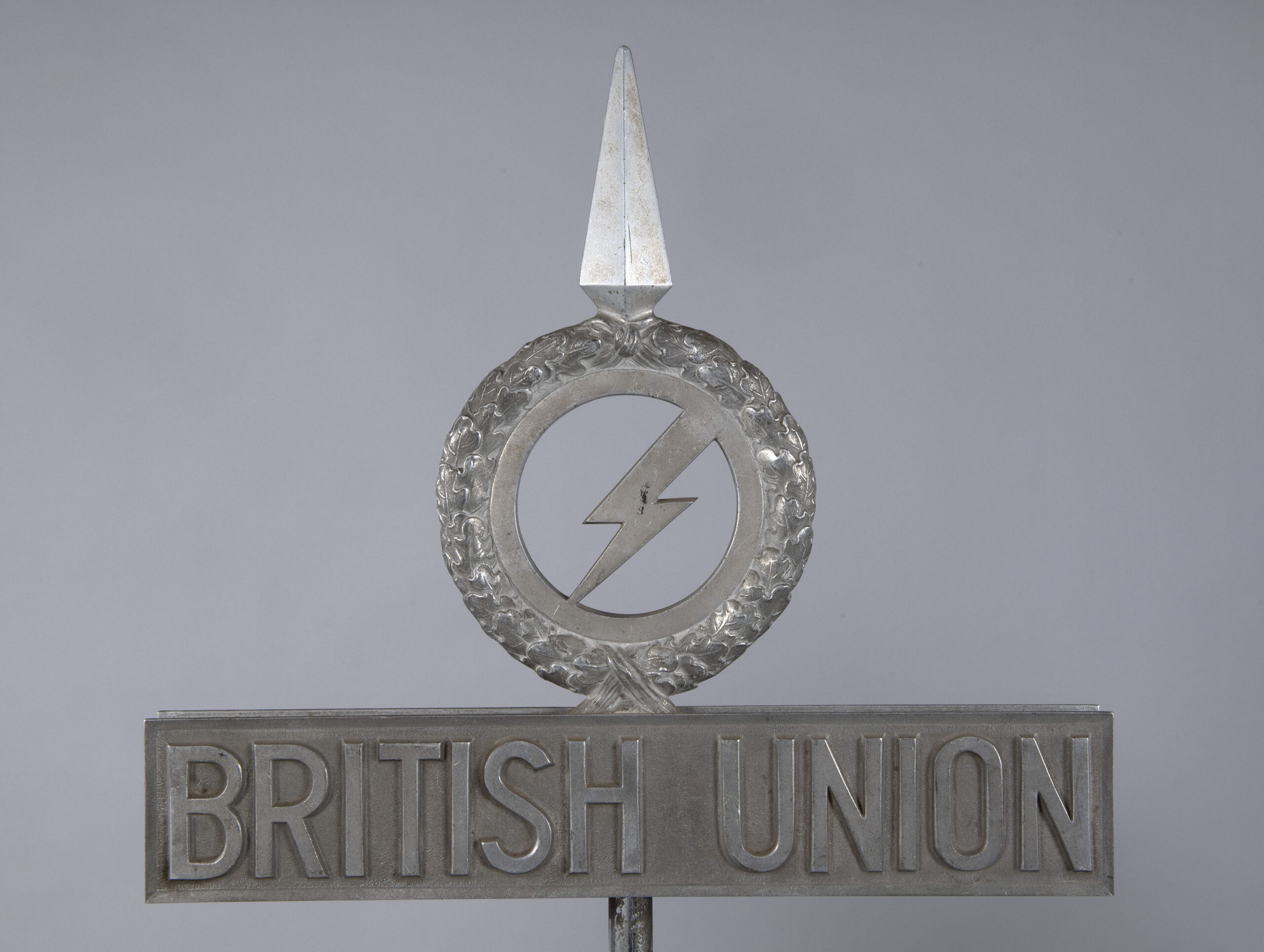

British Union of Fascists Standard
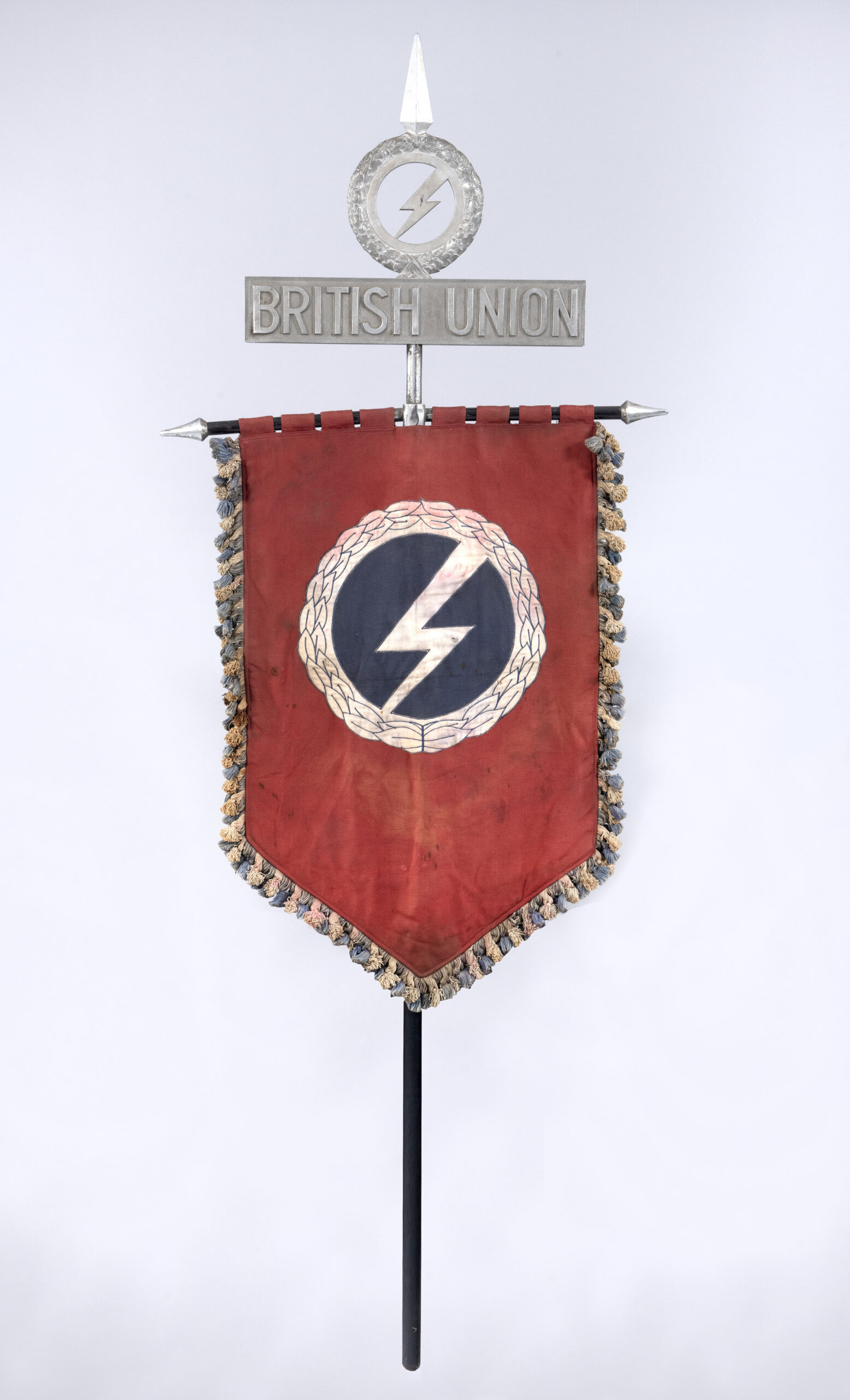
Political standard of the British Union of Fascists (BUF), measuring 50cm across the name box and 43cm from the base of the box to the point of the spear top. The banner itself measures 82cm x 63cm. Its conceptual origins can be traced back to the Deutschland Erwache standard developed in Germany during the 1920’s, which itself was copied from the political standards used by the Italians, which they in turn had modeled after those used by the Roman legions to convey their aura of martial discipline.
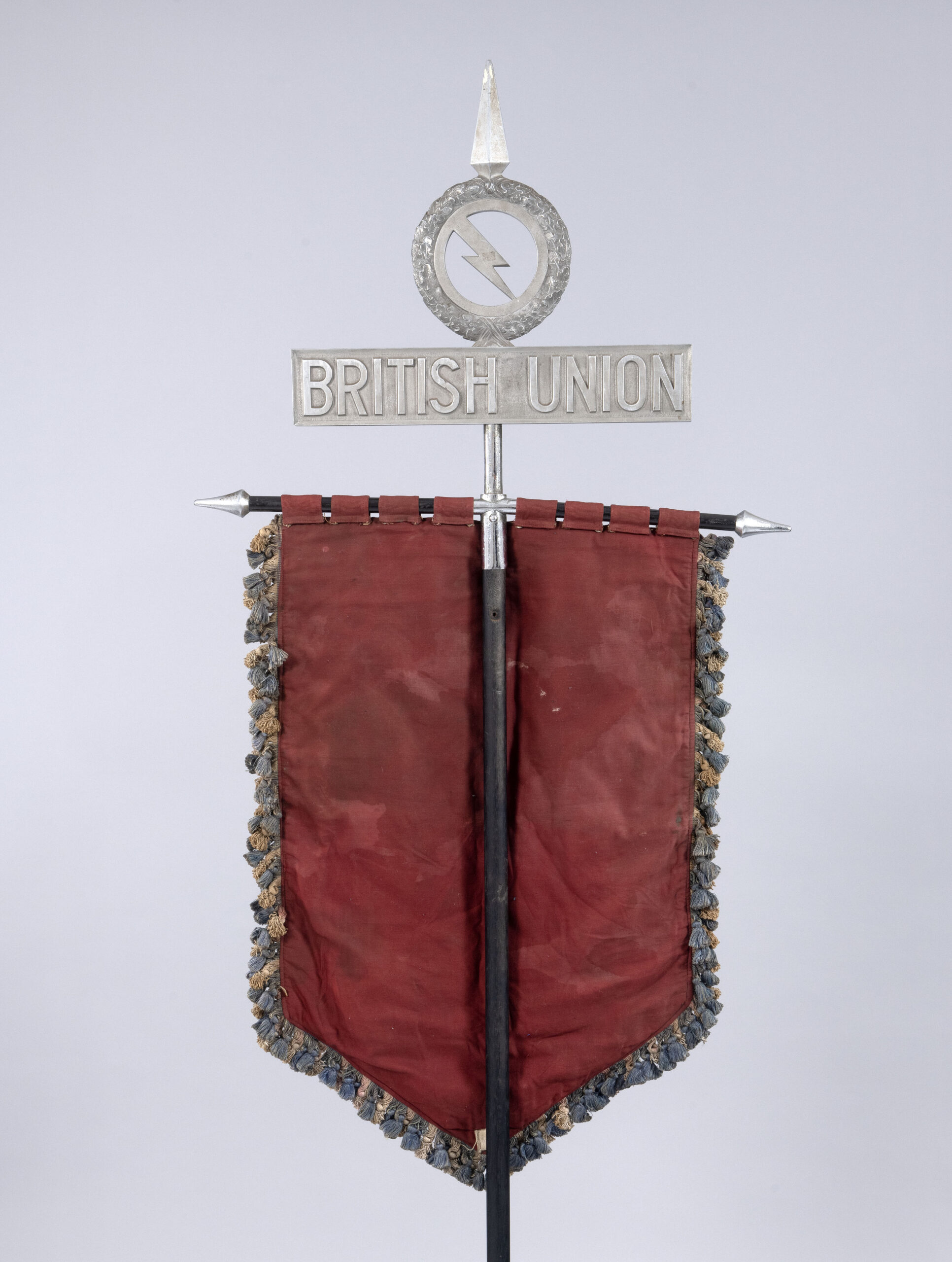
Many images exist of this standard and the banner being used in marches in and around Britain by Sir Oswald Mosley’s BUF. On the outbreak of the Second World War, Sir Mosley, his wife both and other notable BUF officials were interned in the Isle of Man. The British Union, as it was then known, was reformed after the war, and these standards and banners would be used again up until the early 1950’s. Where and by whom these standards were made is unknown, but it is estimated that no more than sixty were ever produced. The top and box are made of aluminum and constructed in line with the German name boxes on their Deutschland Erwache standards, though the British Union boxes are manufactured from a heavier material. The red ribbed material backing cloth with applied laurel leaf is adorned with the central British Union of Fascist device of a white lightning bolt, and the edge of the banner is lined with blue and white colored thread tassels, with all elements composed by the colors of the Union Jack. The reverse bears a plain backing cloth. The 8 suspension straps are all original and are secured with two press studs to each loop.
The BUF were notable for advocating for peace between Britain and Nazi Germany, and for their unique variation of British fascism. They were critical of liberal democracies, comparing the uninformed nature of the average voter resulting in what reflects a demagogy. This outdated parliamentary system, the BUF claimed, should be revolutionized to become a guild-based ‘plural democracy’, wherein individuals’ voting power would be scaled based on their profession, credibility, character and soundness of judgement.
Free shipping on orders over $50!
- Satisfaction Guaranteed
- No Hassle Refunds
- Secure Payments
Political standard of the British Union of Fascists (BUF), measuring 50cm across the name box and 43cm from the base of the box to the point of the spear top. The banner itself measures 82cm x 63cm. Its conceptual origins can be traced back to the Deutschland Erwache standard developed in Germany during the 1920’s, which itself was copied from the political standards used by the Italians, which they in turn had modeled after those used by the Roman legions to convey their aura of martial discipline.
Many images exist of this standard and the banner being used in marches in and around Britain by Sir Oswald Mosley’s BUF. On the outbreak of the Second World War, Sir Mosley, his wife both and other notable BUF officials were interned in the Isle of Man. The British Union, as it was then known, was reformed after the war, and these standards and banners would be used again up until the early 1950’s. Where and by whom these standards were made is unknown, but it is estimated that no more than sixty were ever produced. The top and box are made of aluminum and constructed in line with the German name boxes on their Deutschland Erwache standards, though the British Union boxes are manufactured from a heavier material. The red ribbed material backing cloth with applied laurel leaf is adorned with the central British Union of Fascist device of a white lightning bolt, and the edge of the banner is lined with blue and white colored thread tassels, with all elements composed by the colors of the Union Jack. The reverse bears a plain backing cloth. The 8 suspension straps are all original and are secured with two press studs to each loop.
The BUF were notable for advocating for peace between Britain and Nazi Germany, and for their unique variation of British fascism. They were critical of liberal democracies, comparing the uninformed nature of the average voter resulting in what reflects a demagogy. This outdated parliamentary system, the BUF claimed, should be revolutionized to become a guild-based ‘plural democracy’, wherein individuals’ voting power would be scaled based on their profession, credibility, character and soundness of judgement.