Vichy Sword by Cartier
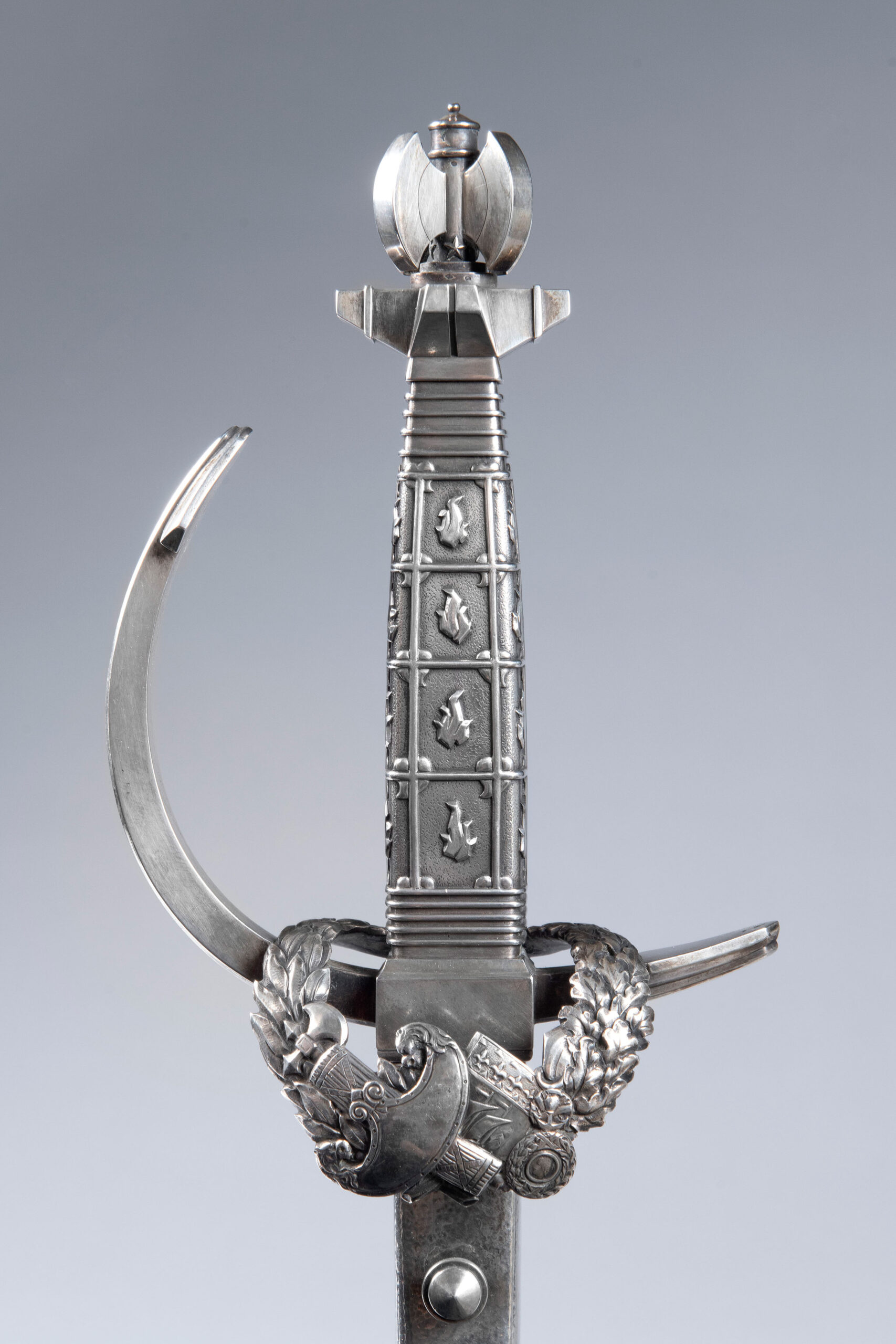
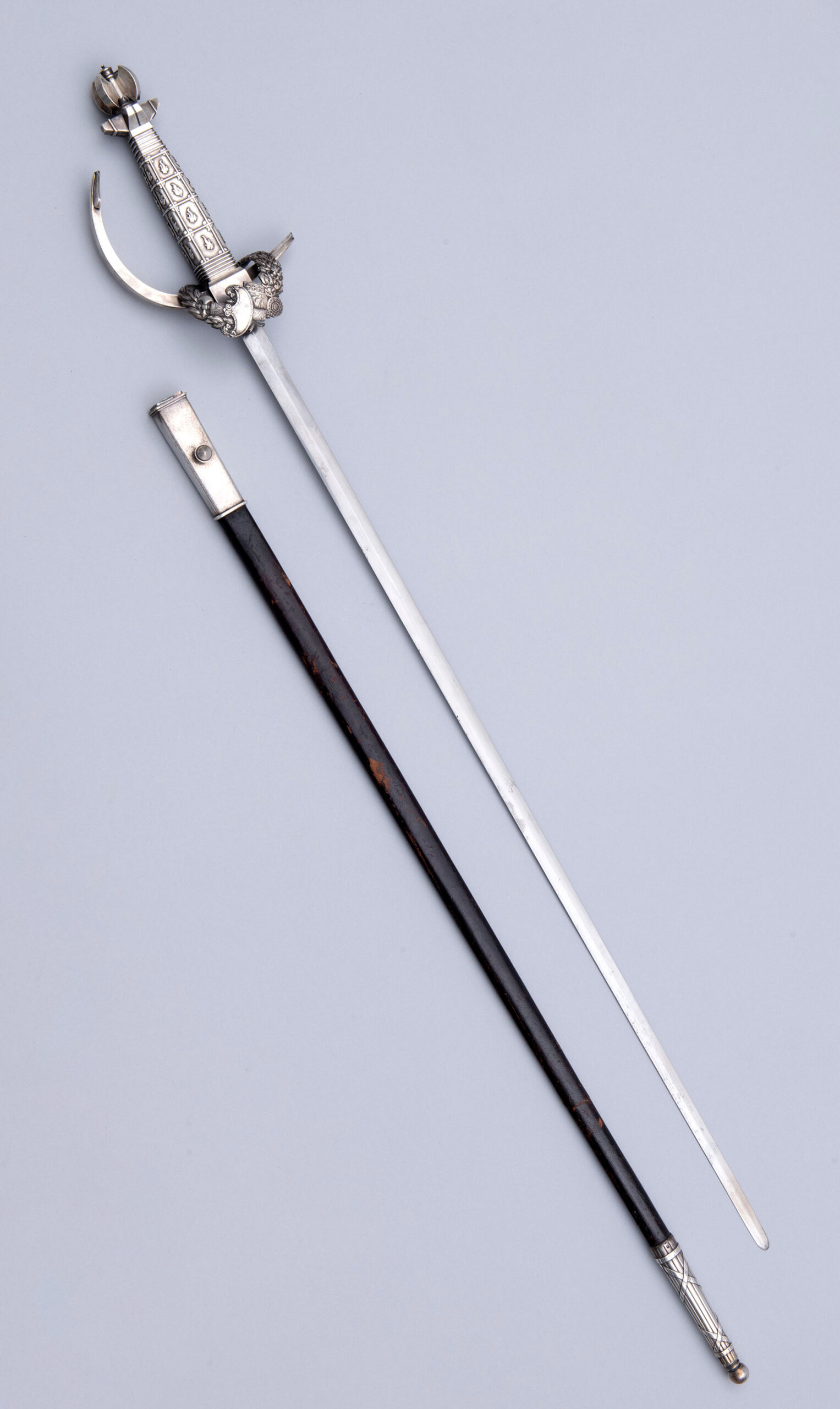
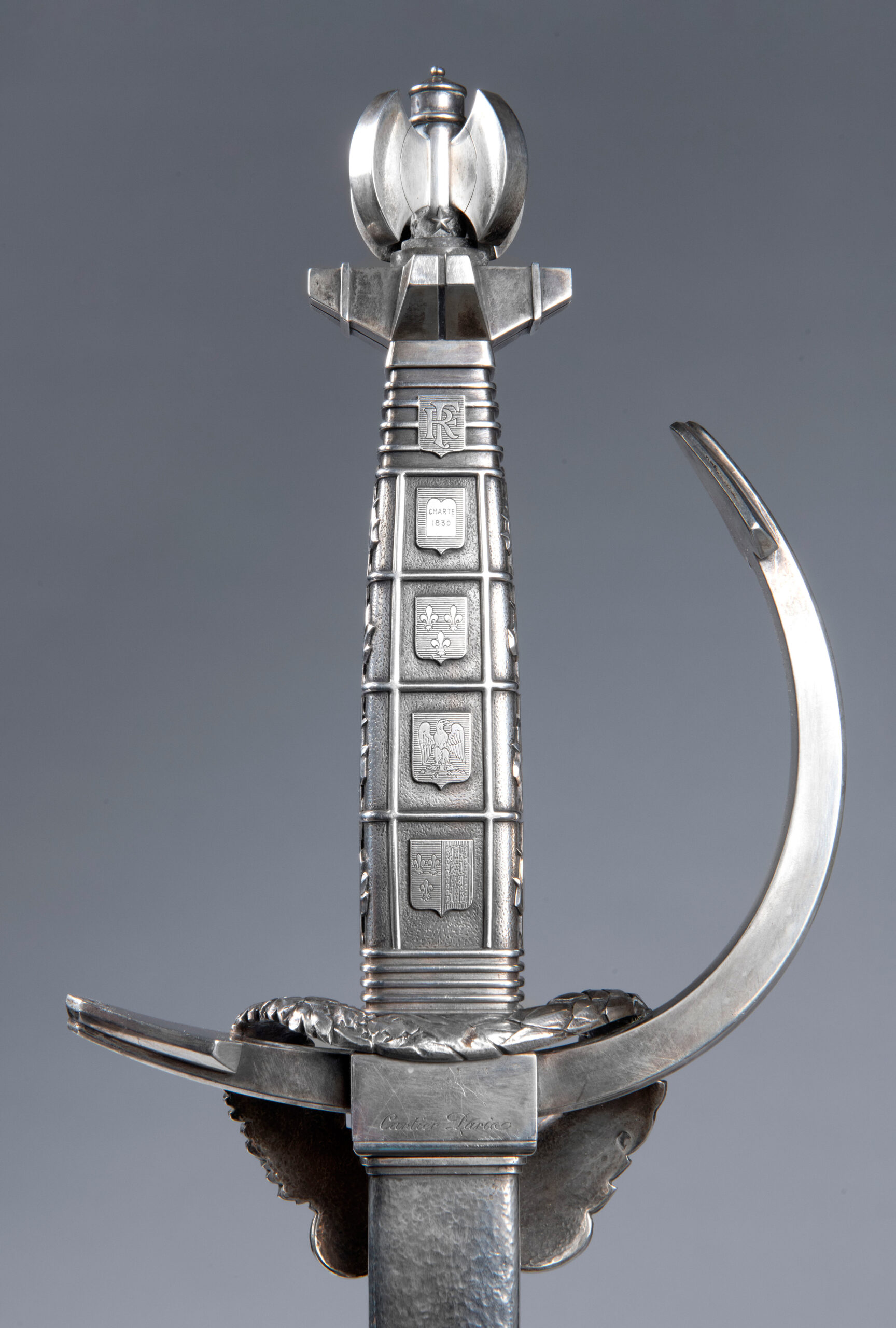
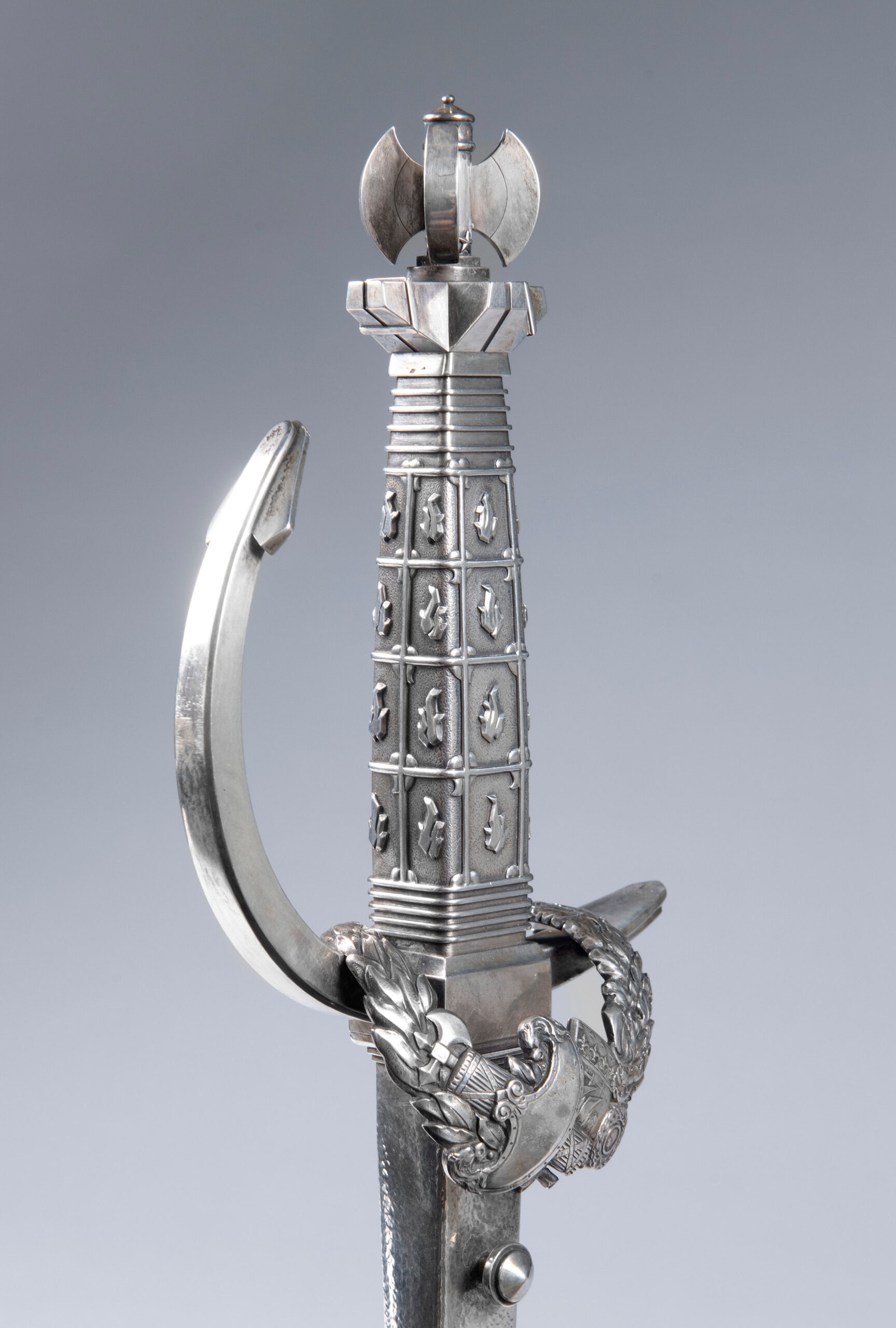
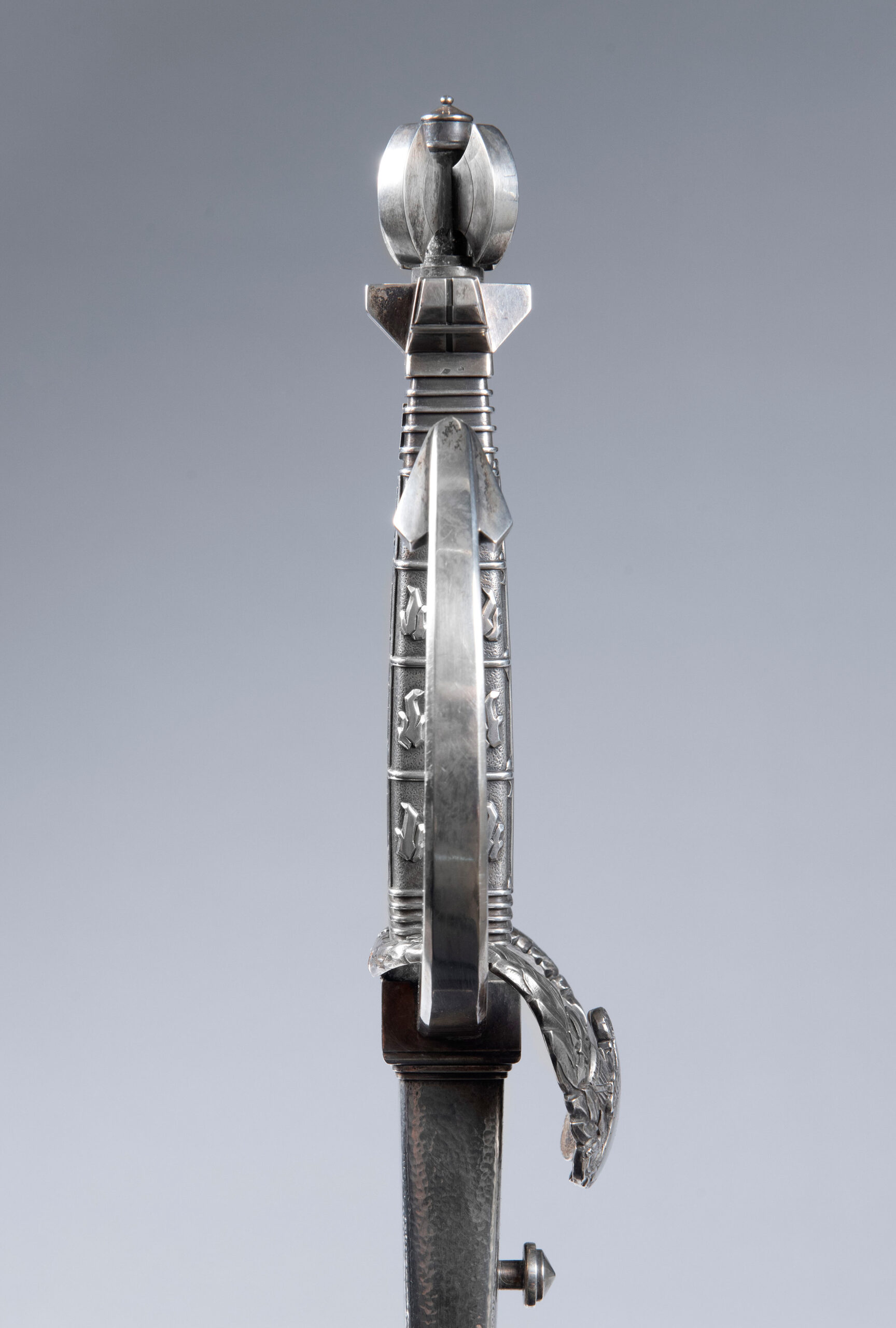
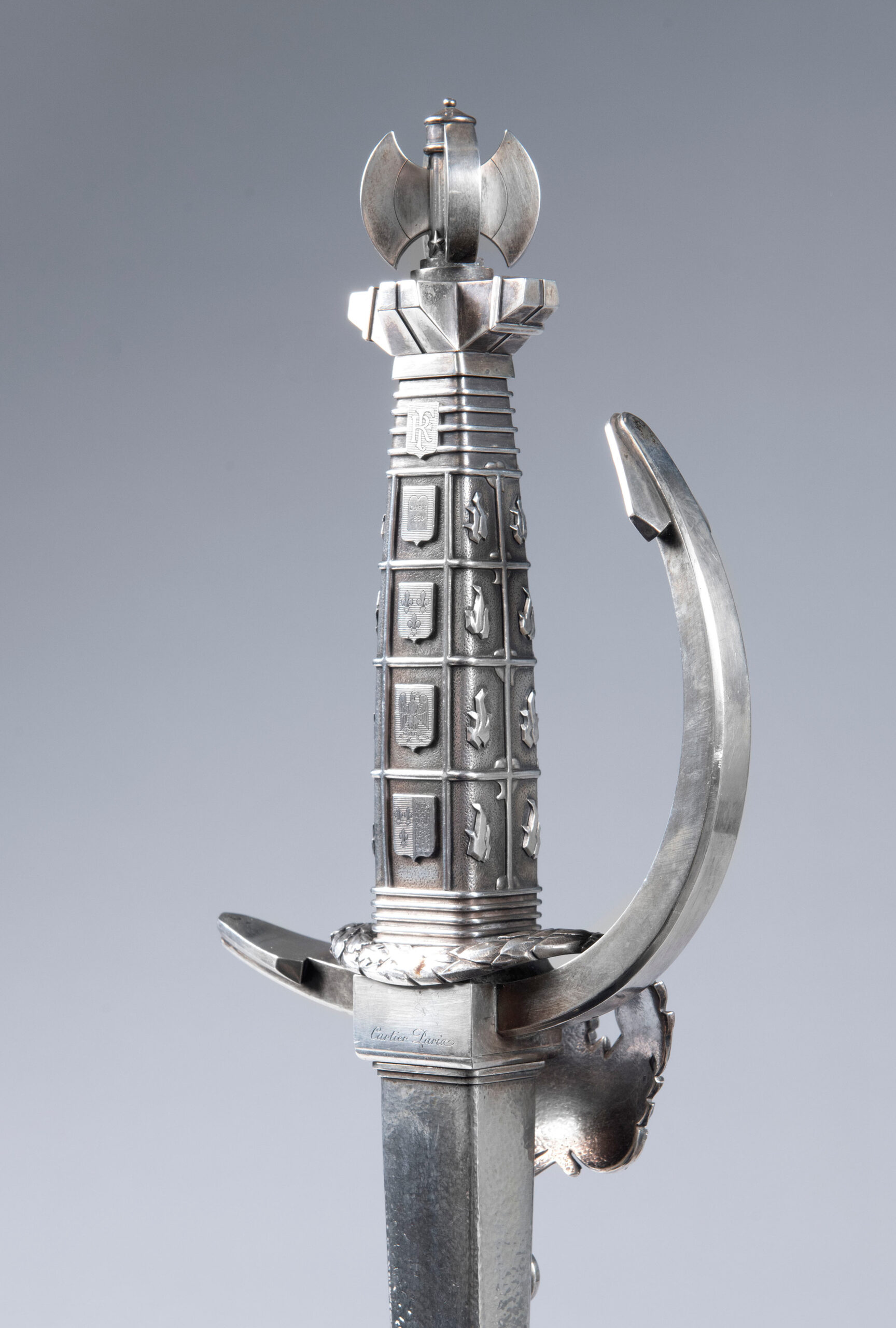
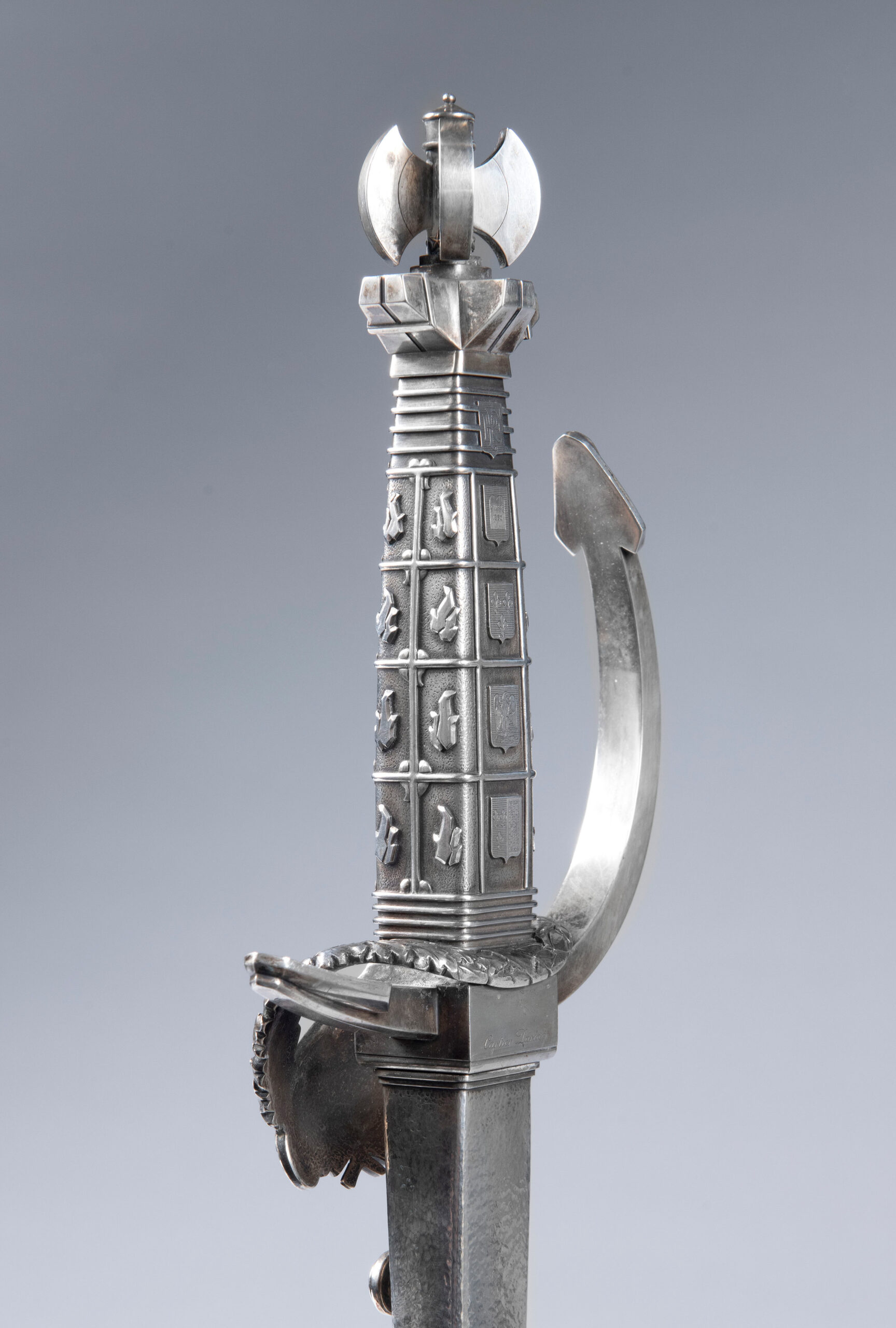
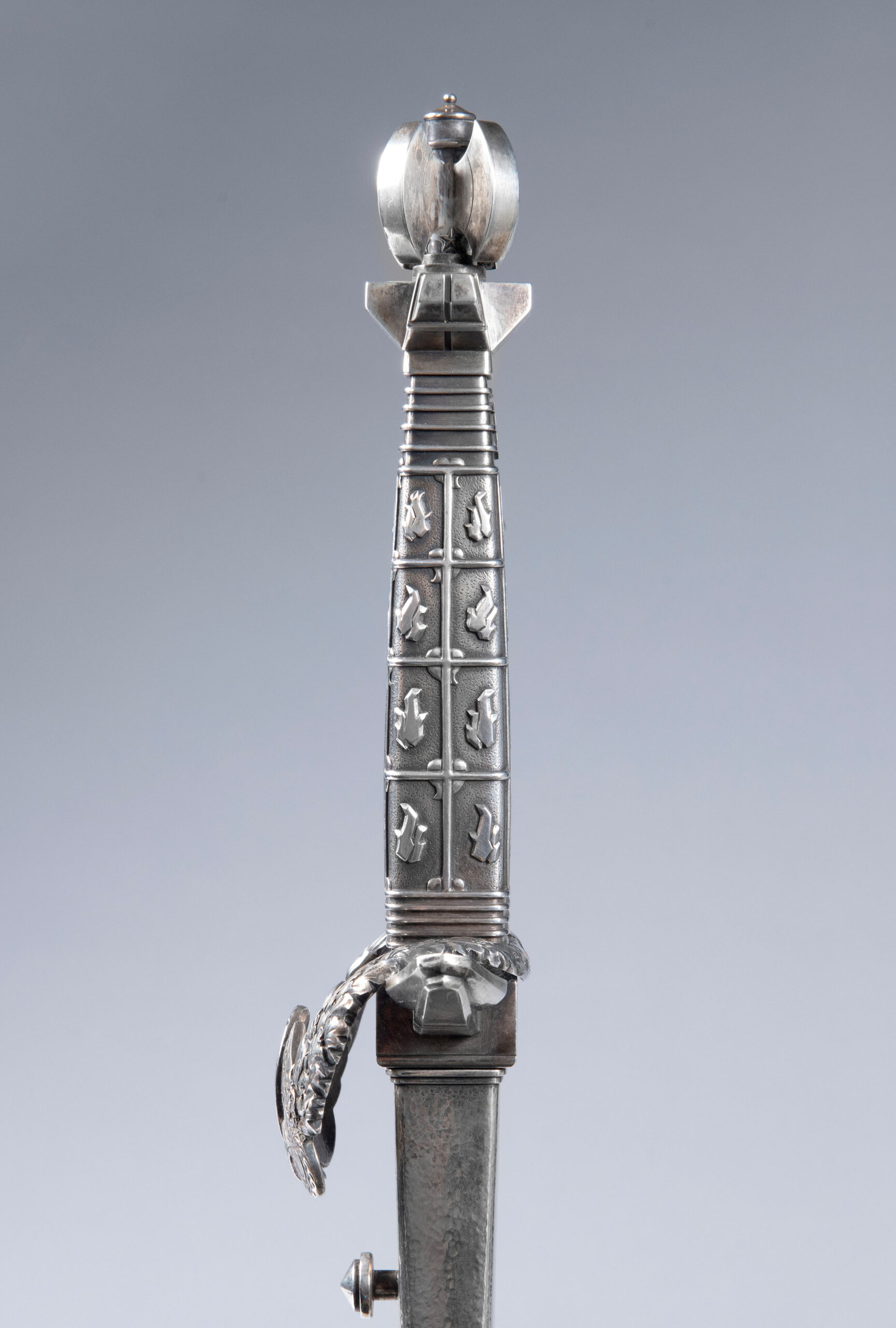
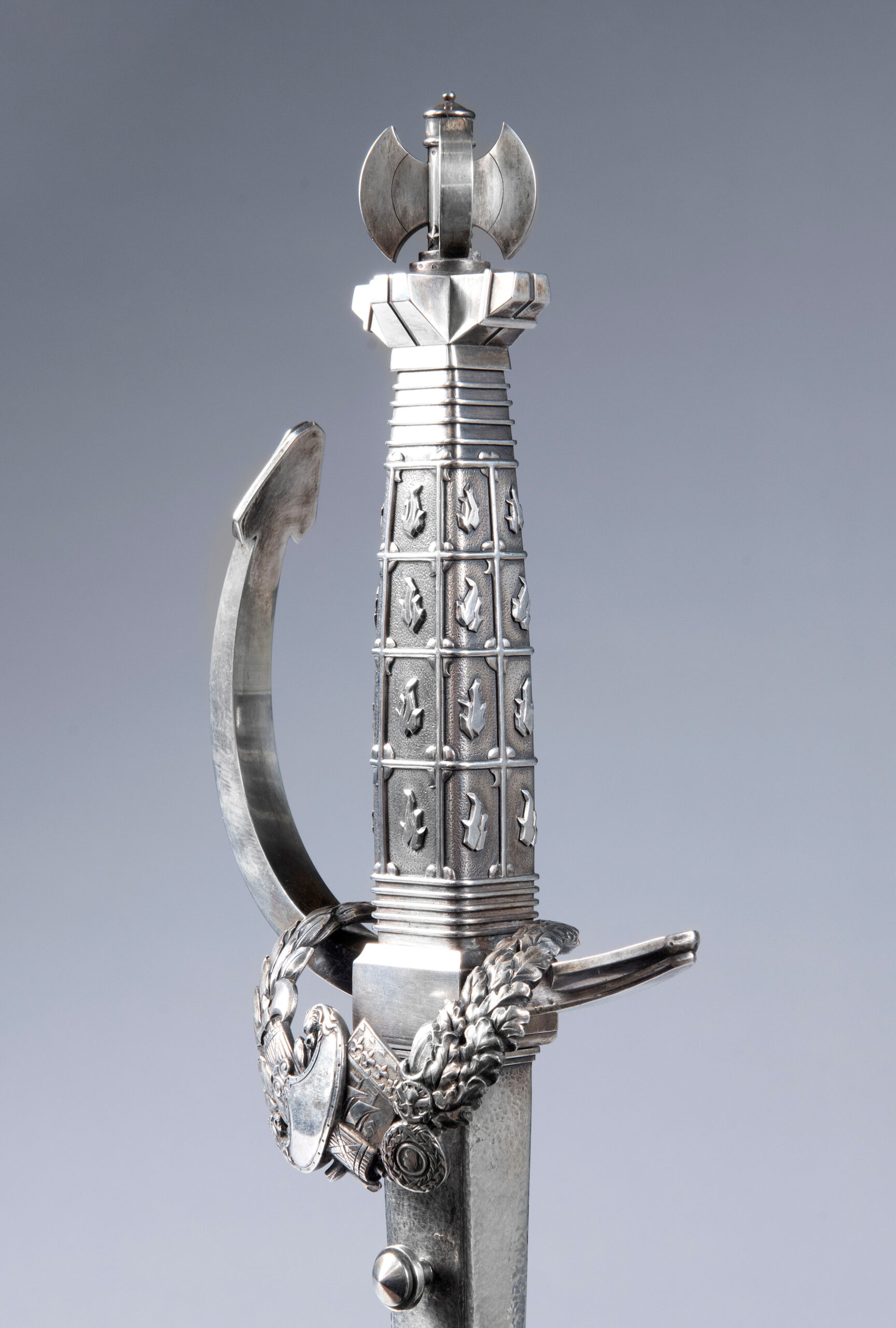
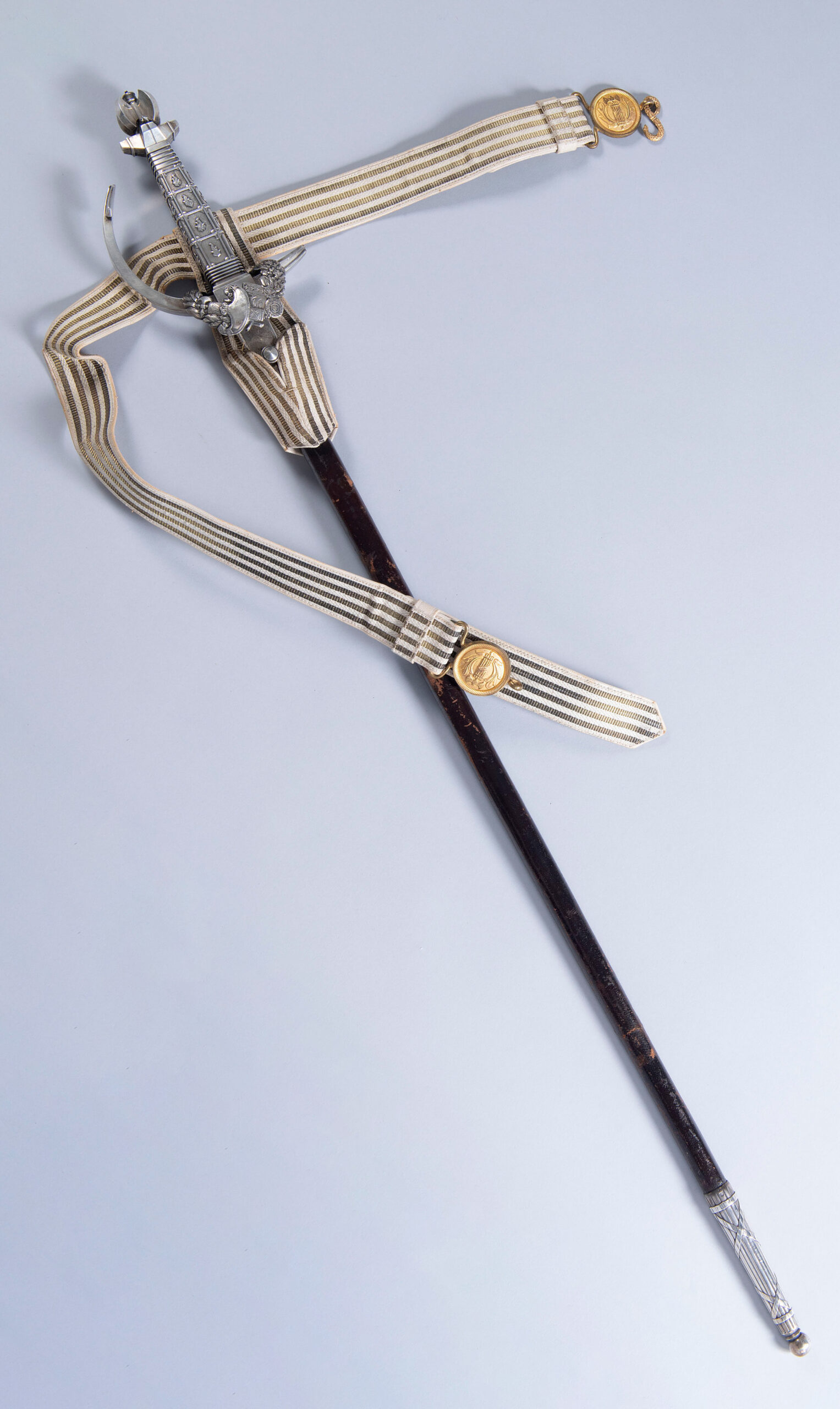
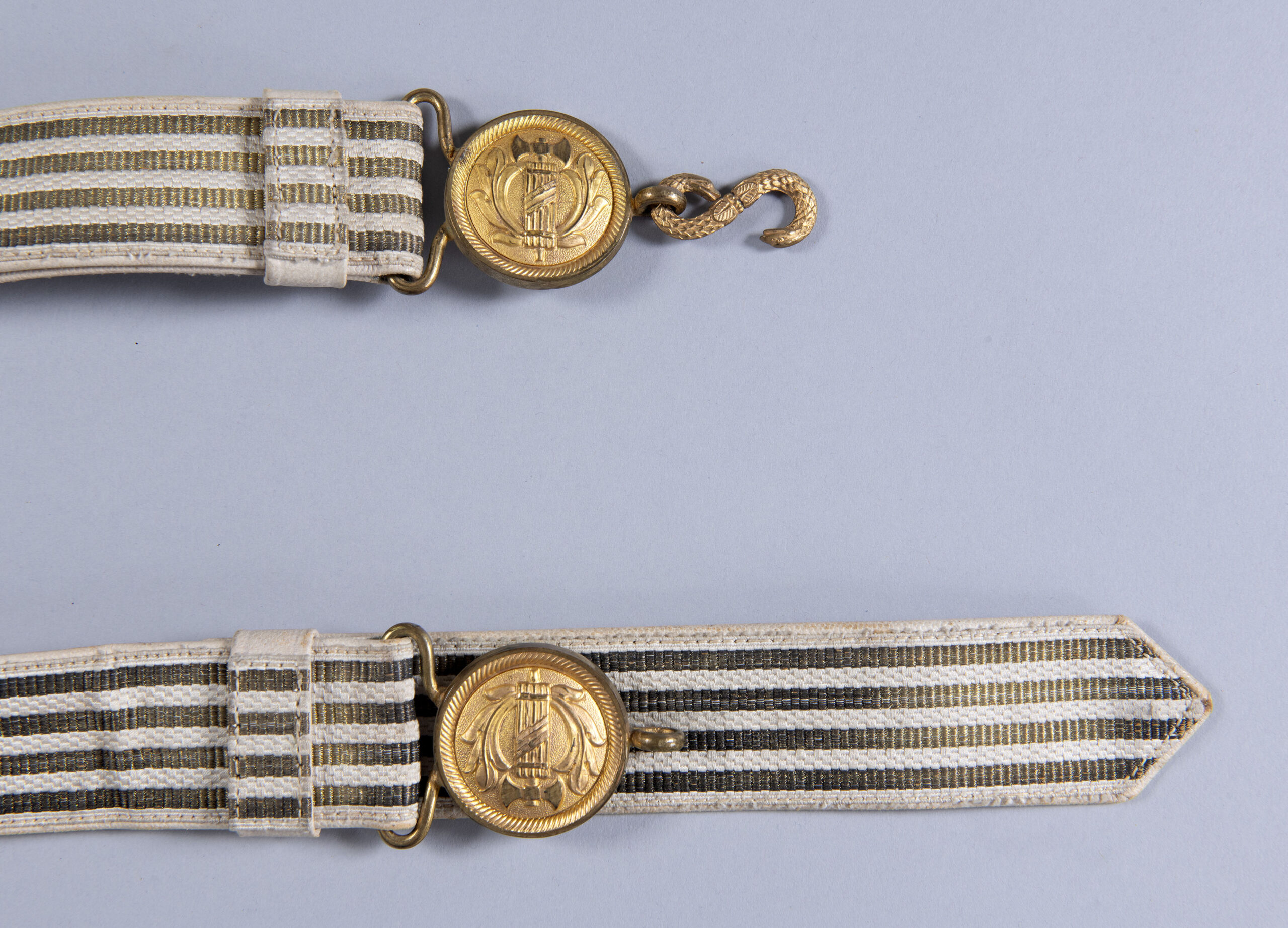
A fascist sword of honor handcrafted by Cartier and awarded to Georges Scapini by the city of Paris in 1944. Blends numerous fascist iconographic motifs associated with the Vichy regime. The four-headed axe forming the pommel is a rendition of the ‘francisque gallique’, a symbol derived from the ancient Gallic throwing axe. Serving as an expression of France’s pre-republican martial heritage rooted in the warrior traditions of Gaul, the francisque gallique was used extensively by nationalist organizations, and later adopted by Marshal Petain’s État français (French State) in 1940.
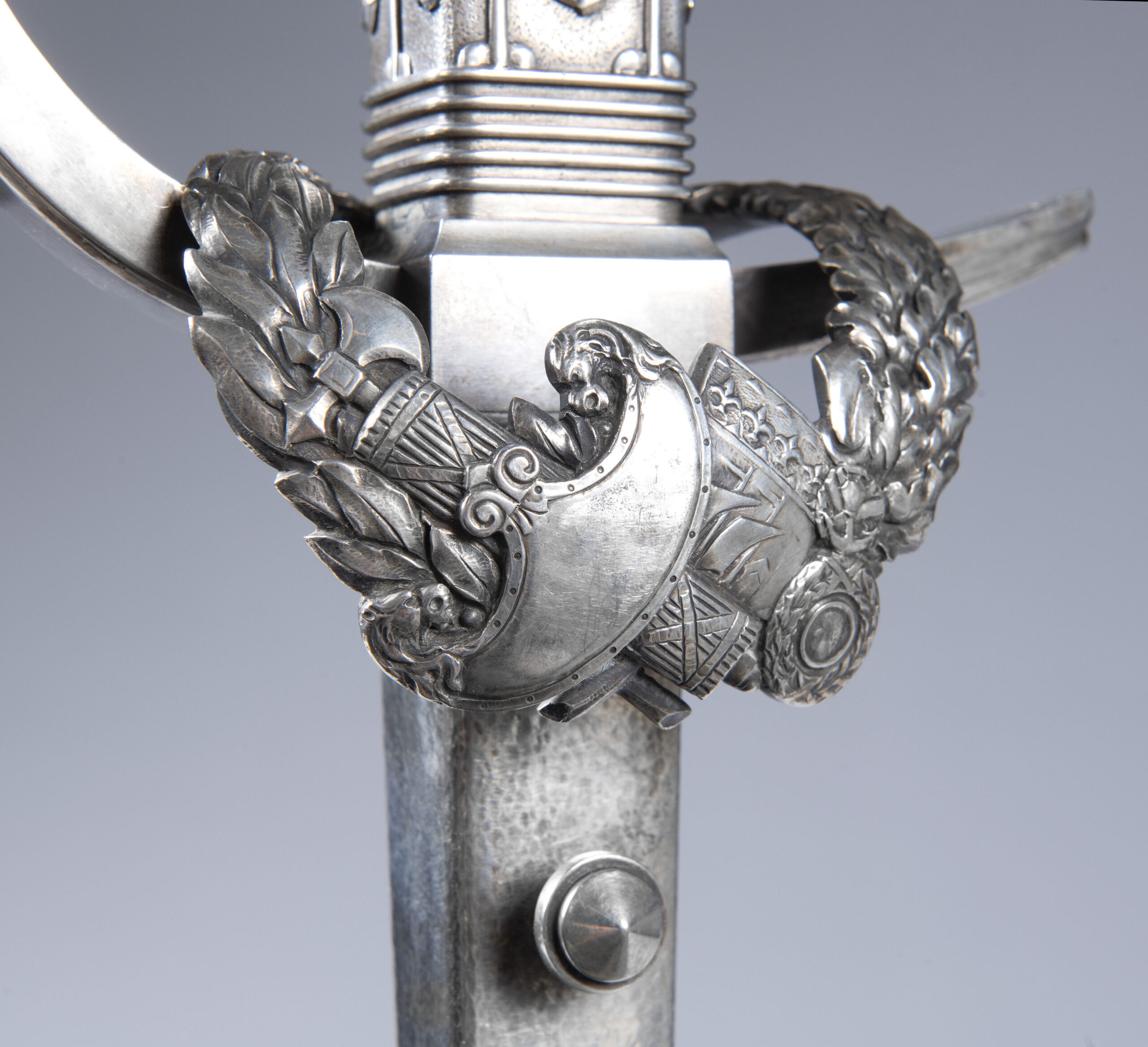
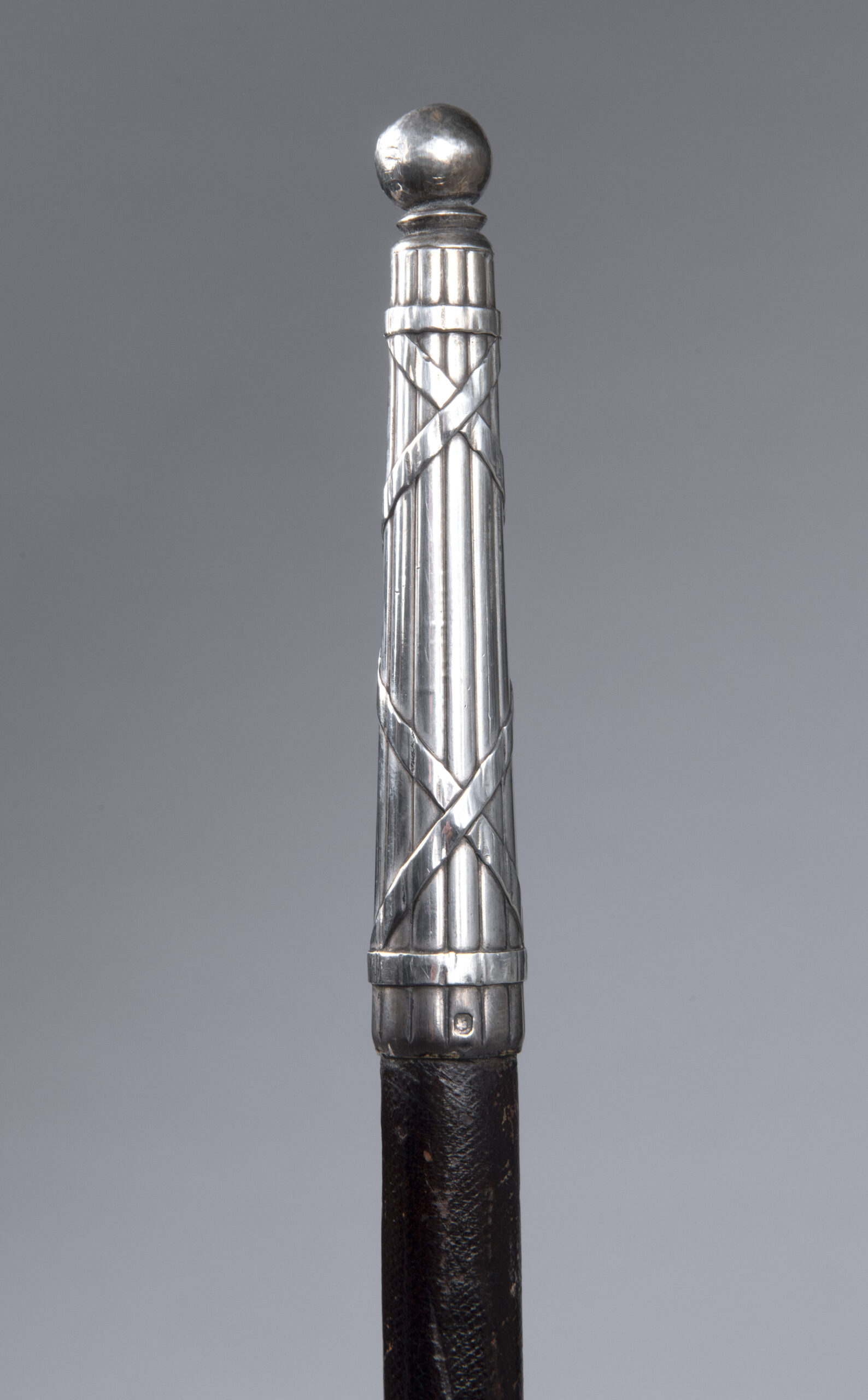
Embossed across the hilt is an array of stylized flames, symbolizing the continuity of France’s eternal, undying national spirit. Immaculately engraved on the back of the hilt is a succession of heraldic symbols, tracing the historical continuity of the French nation through the ages. The monogram “RF” stands for French Republic, below which is an inscription referencing the 1830 constitution of the July Monarchy. This is followed by the royalist fleur-de-lis, Napoleonic imperial arms, and the Bourbon arms of France and Navarre. Comprising the handguard is a patchwork of fascist and royalist engravings, including a fasces, crown and the coat of arms of the city of Paris.
The recipient of this sword, Georges Scapini, was a French lawyer, war veteran and diplomat under the Vichy government. Completely blind from an injury sustained in 1915 while storming a German trench, Scapini nevertheless went on to obtain a degree in law, serve as the president of Association for the Blind of War and later entered politics, successfully being elected as MP for the 17th arrondissement of Paris. He was also a staunch pacifist, seeking Franco-German reconciliation by joining the Comité France-Allemagne (Franco-German Committee).
Following the French capitulation of June 1940, Marshal Pétain entrusted Scapini with the momentous task of safeguarding the welfare of the approximately 1.8 million French prisoners-of-war held across camps in Germany. Scapini personally visited these men, pressed for releases and opposed the persecution of Jewish detainees, and was promoted to French ambassador in order to grant him diplomatic immunity and a high-ranking post commensurate with his mission.
Upon his return to France after the war, Scapini was charged with “undermining state security” and “colluding with the enemy”, but ultimately acquitted in 1952. Georges Scapini passed away in 1976 at the age of 82, leaving behind a legacy defined by sacrifice, public service and steadfast devotion to France and her people, a legacy which lives on in the spirit of this sword.
Free shipping on orders over $50!
- Satisfaction Guaranteed
- No Hassle Refunds
- Secure Payments
A fascist sword of honor handcrafted by Cartier and awarded to Georges Scapini by the city of Paris in 1944. Blends numerous fascist iconographic motifs associated with the Vichy regime. The four-headed axe forming the pommel is a rendition of the ‘francisque gallique’, a symbol derived from the ancient Gallic throwing axe. Serving as an expression of France’s pre-republican martial heritage rooted in the warrior traditions of Gaul, the francisque gallique was used extensively by nationalist organizations, and later adopted by Marshal Petain’s État français (French State) in 1940.
Embossed across the hilt is an array of stylized flames, symbolizing the continuity of France’s eternal, undying national spirit. Immaculately engraved on the back of the hilt is a succession of heraldic symbols, tracing the historical continuity of the French nation through the ages. The monogram “RF” stands for French Republic, below which is an inscription referencing the 1830 constitution of the July Monarchy. This is followed by the royalist fleur-de-lis, Napoleonic imperial arms, and the Bourbon arms of France and Navarre. Comprising the handguard is a patchwork of fascist and royalist engravings, including a fasces, crown and the coat of arms of the city of Paris.
The recipient of this sword, Georges Scapini, was a French lawyer, war veteran and diplomat under the Vichy government. Completely blind from an injury sustained in 1915 while storming a German trench, Scapini nevertheless went on to obtain a degree in law, serve as the president of Association for the Blind of War and later entered politics, successfully being elected as MP for the 17th arrondissement of Paris. He was also a staunch pacifist, seeking Franco-German reconciliation by joining the Comité France-Allemagne (Franco-German Committee).
Following the French capitulation of June 1940, Marshal Pétain entrusted Scapini with the momentous task of safeguarding the welfare of the approximately 1.8 million French prisoners-of-war held across camps in Germany. Scapini personally visited these men, pressed for releases and opposed the persecution of Jewish detainees, and was promoted to French ambassador in order to grant him diplomatic immunity and a high-ranking post commensurate with his mission.
Upon his return to France after the war, Scapini was charged with “undermining state security” and “colluding with the enemy”, but ultimately acquitted in 1952. Georges Scapini passed away in 1976 at the age of 82, leaving behind a legacy defined by sacrifice, public service and steadfast devotion to France and her people, a legacy which lives on in the spirit of this sword.