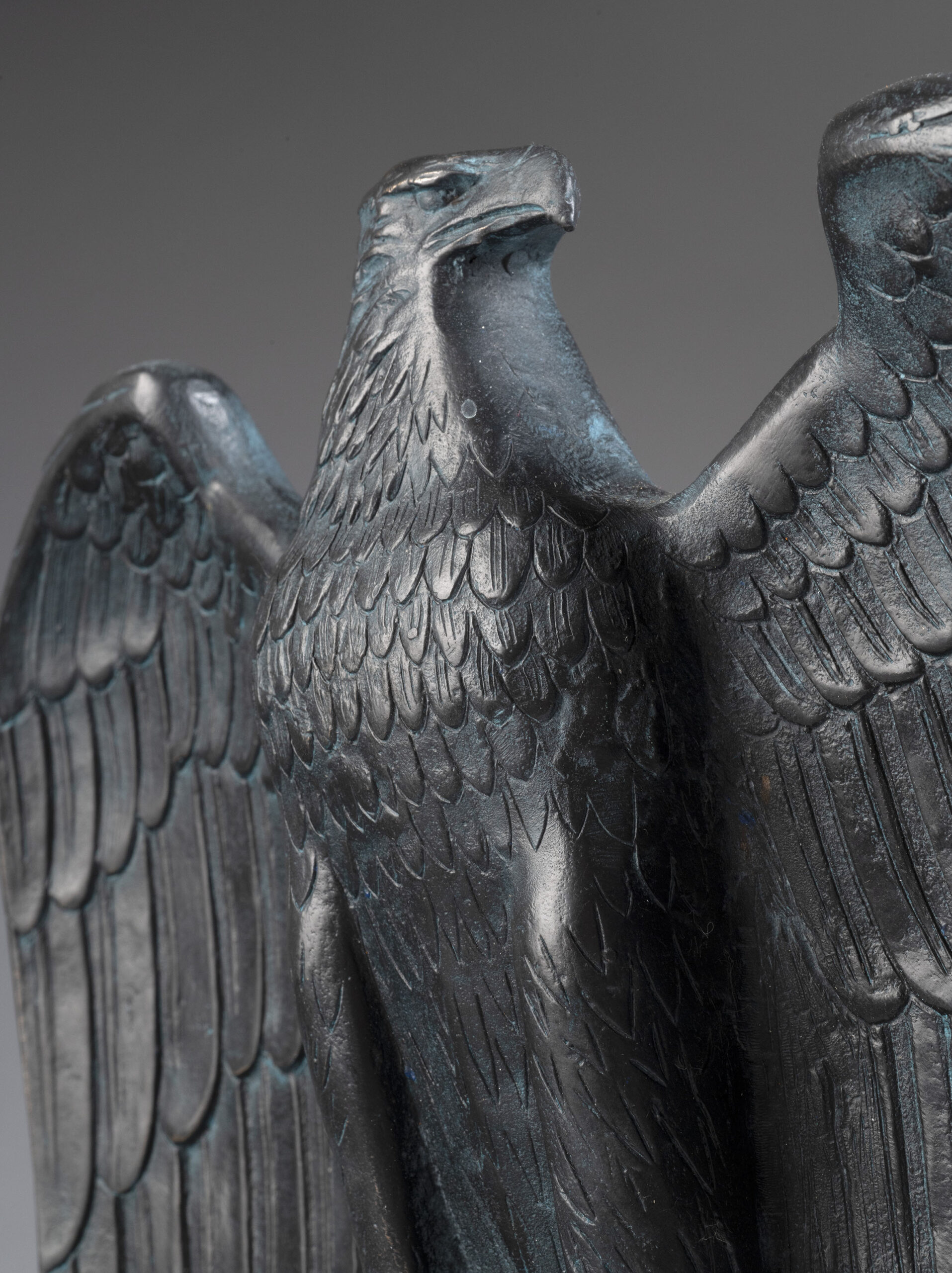
Kurt Schmid-Ehmen Eagle
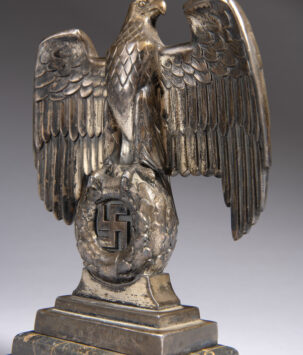
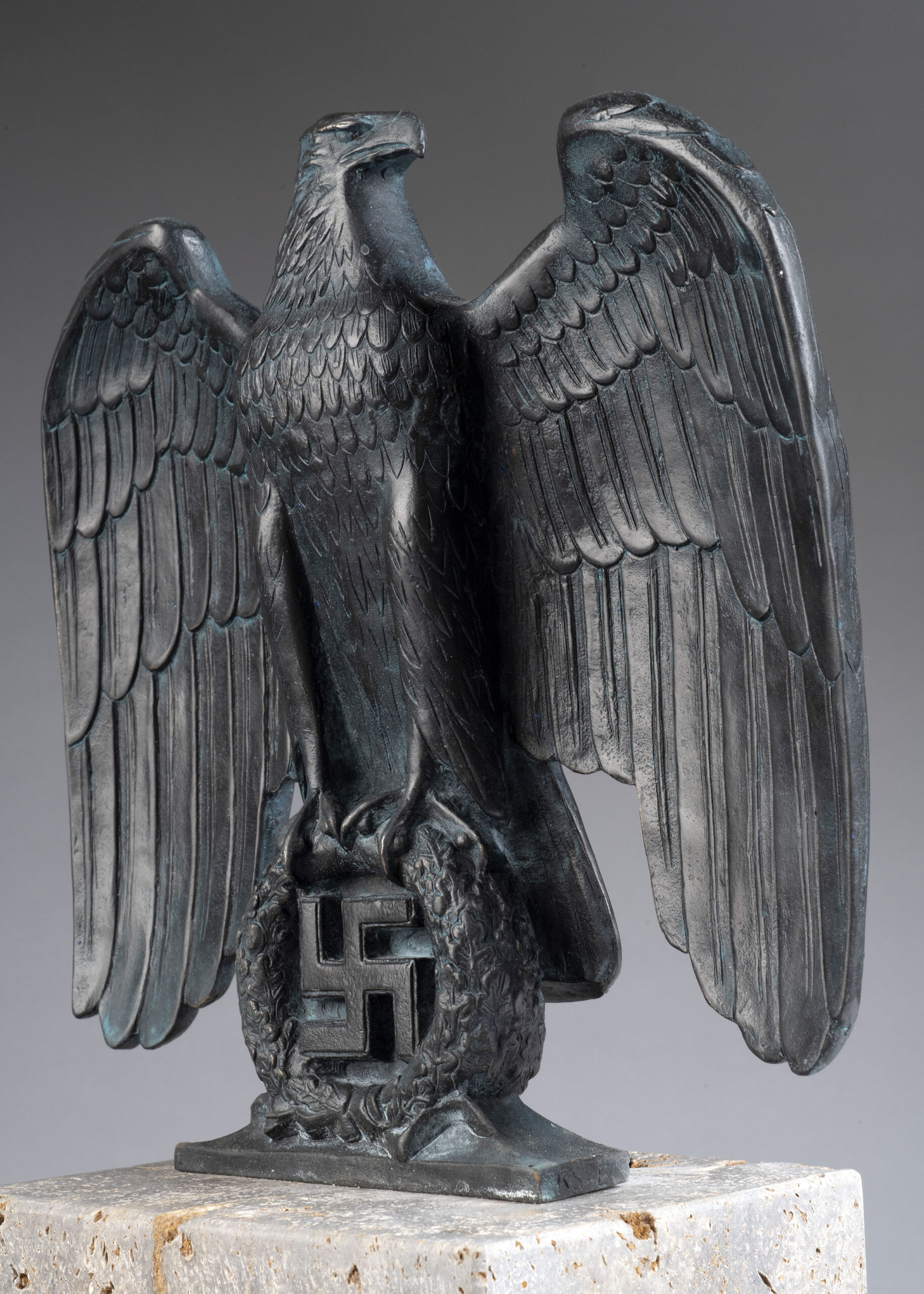
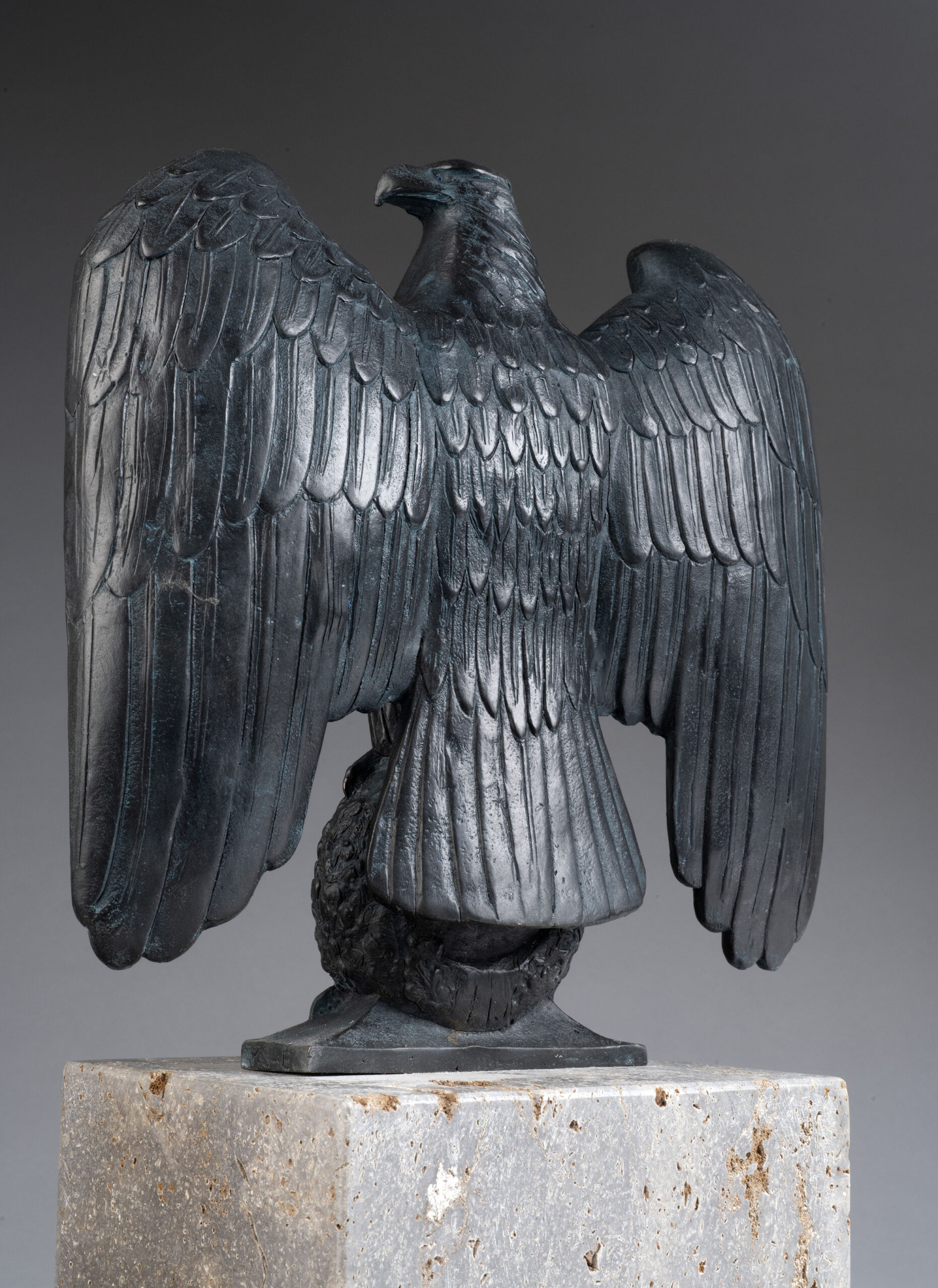
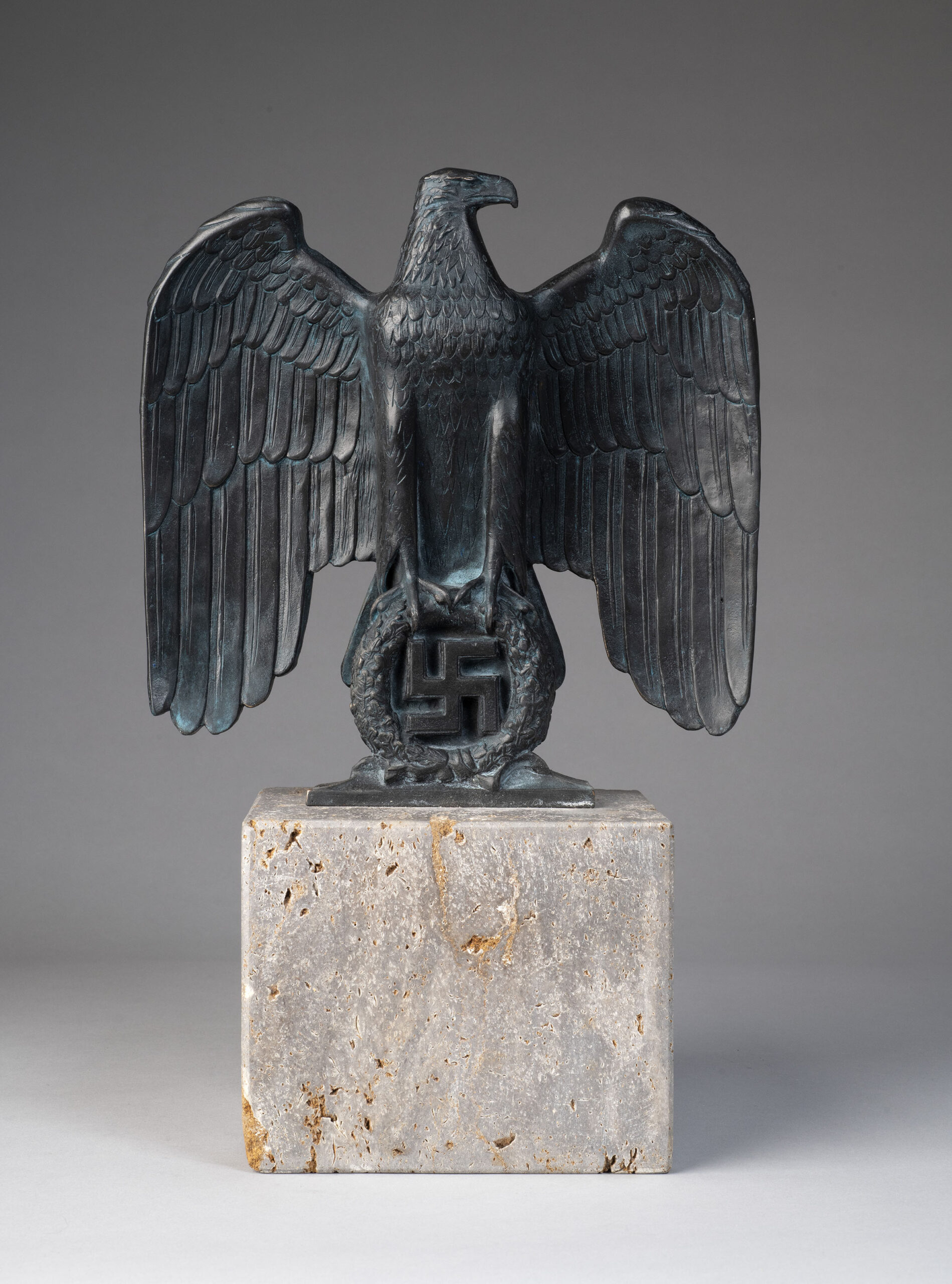
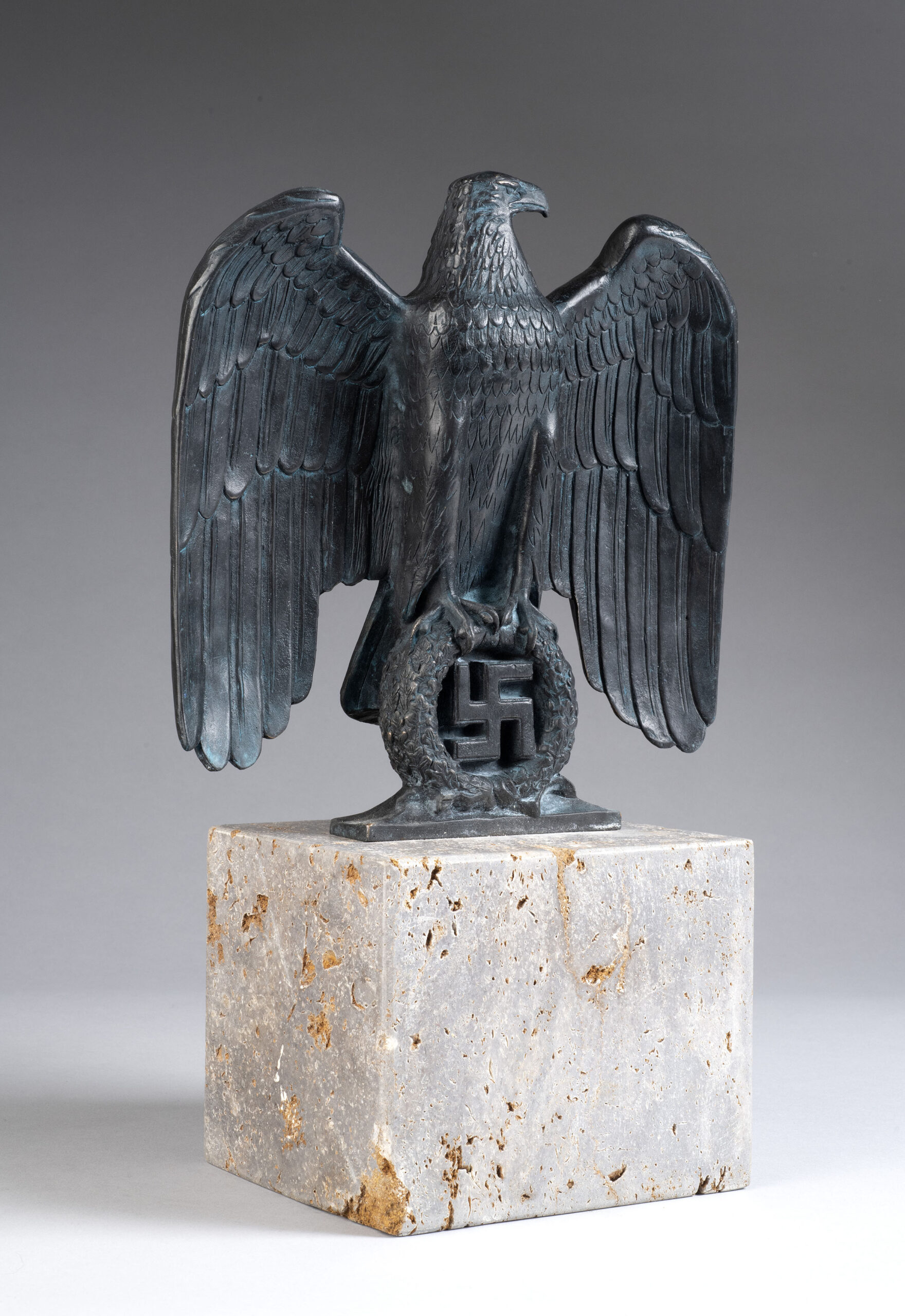
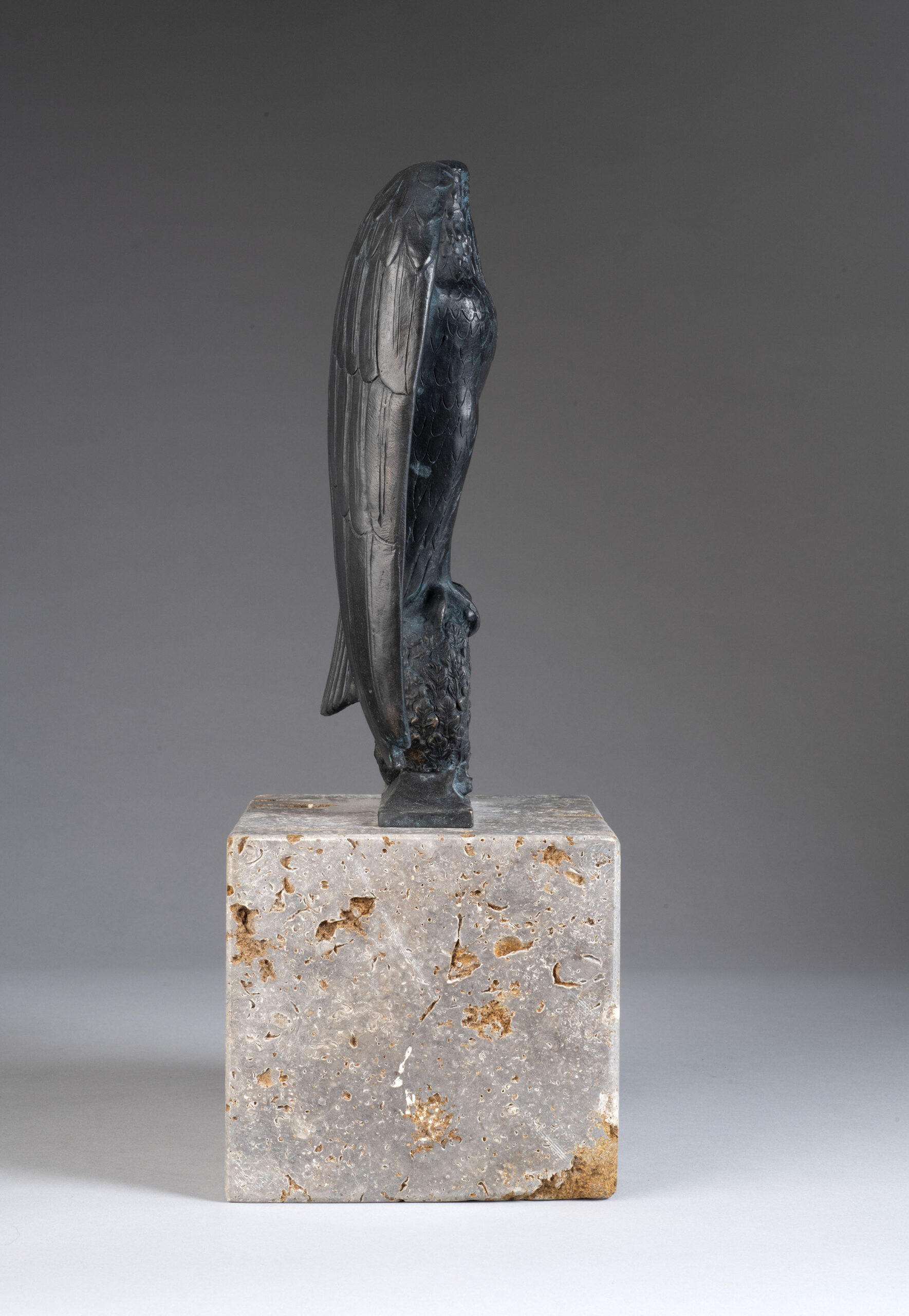
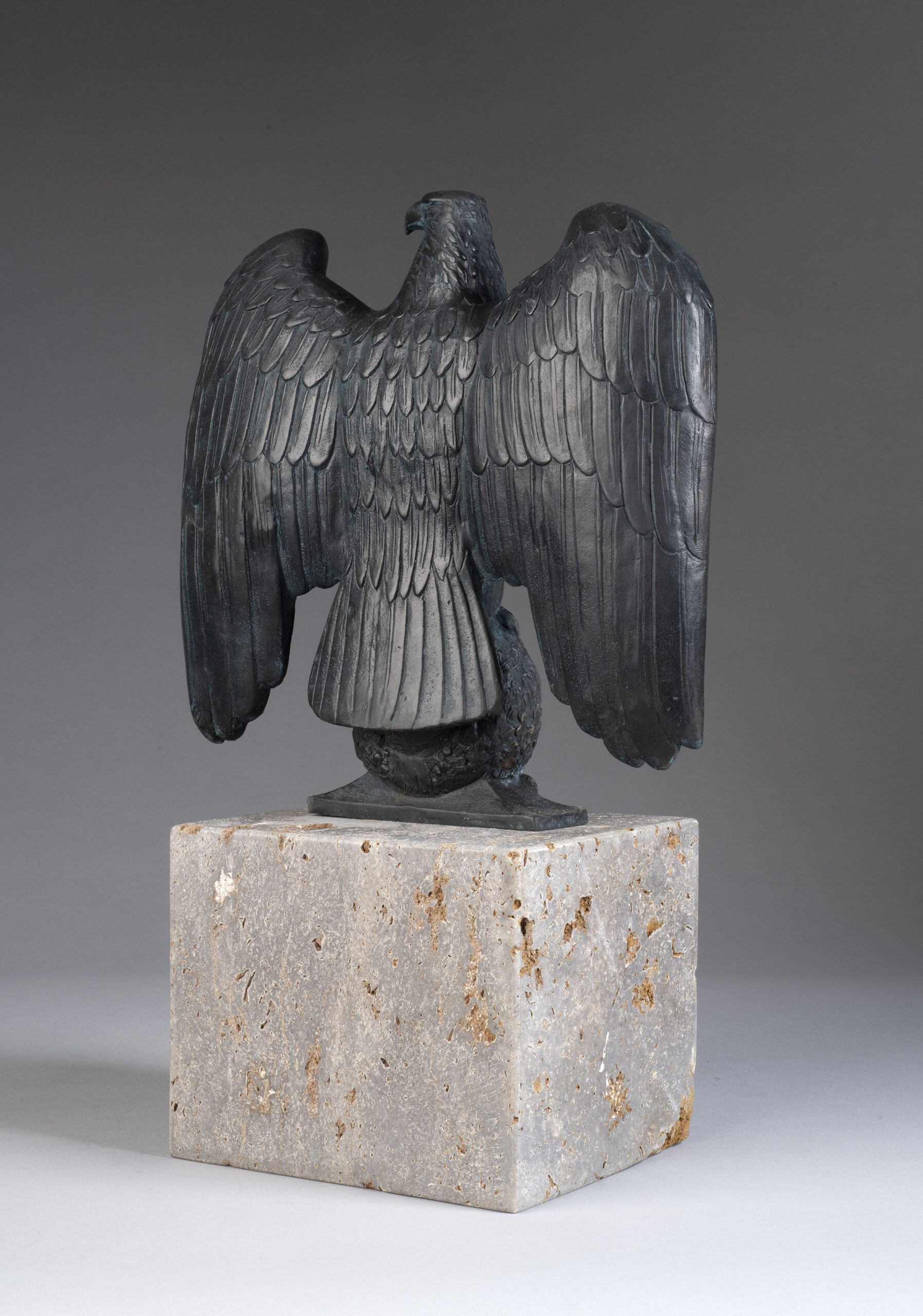
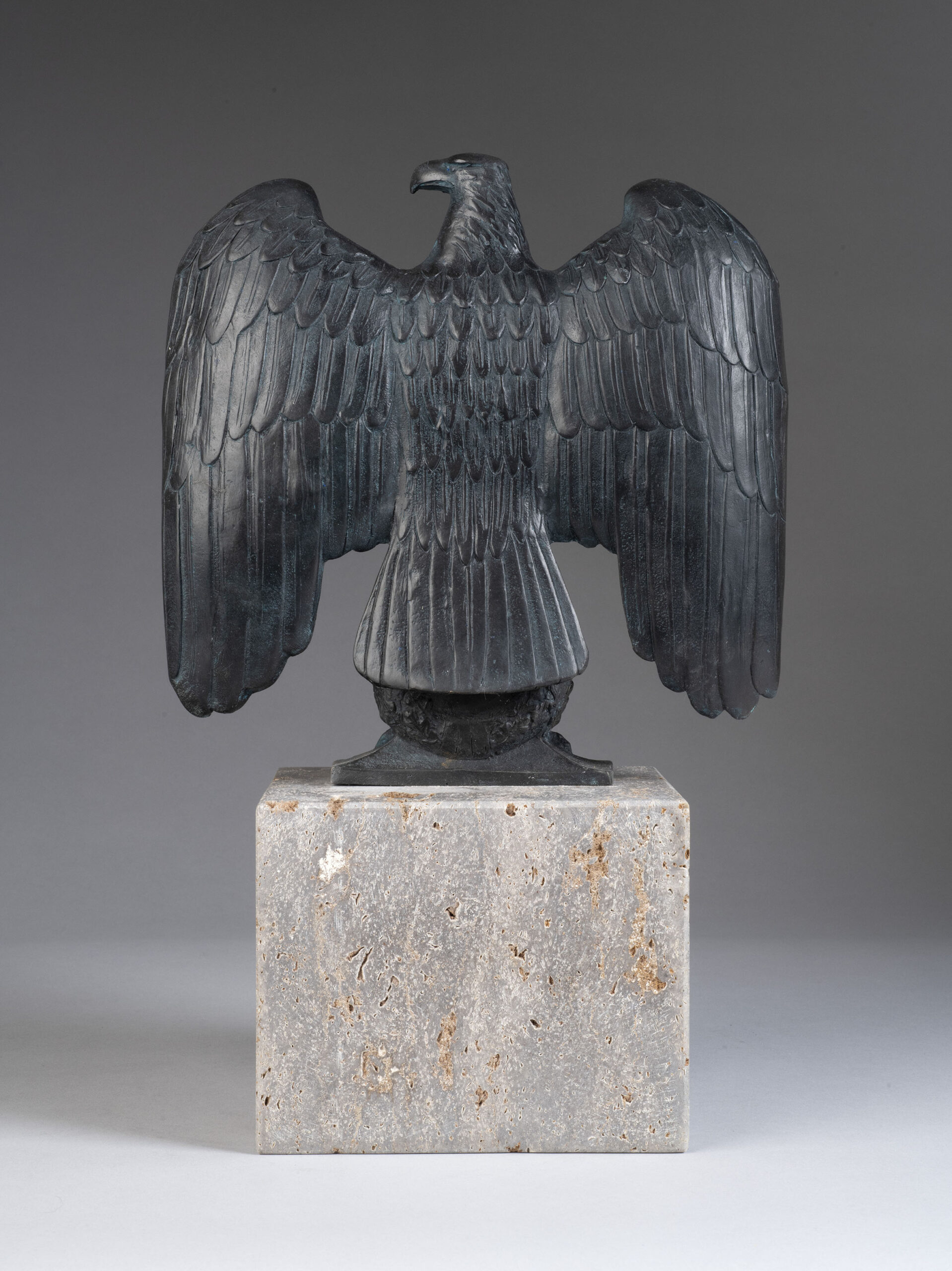
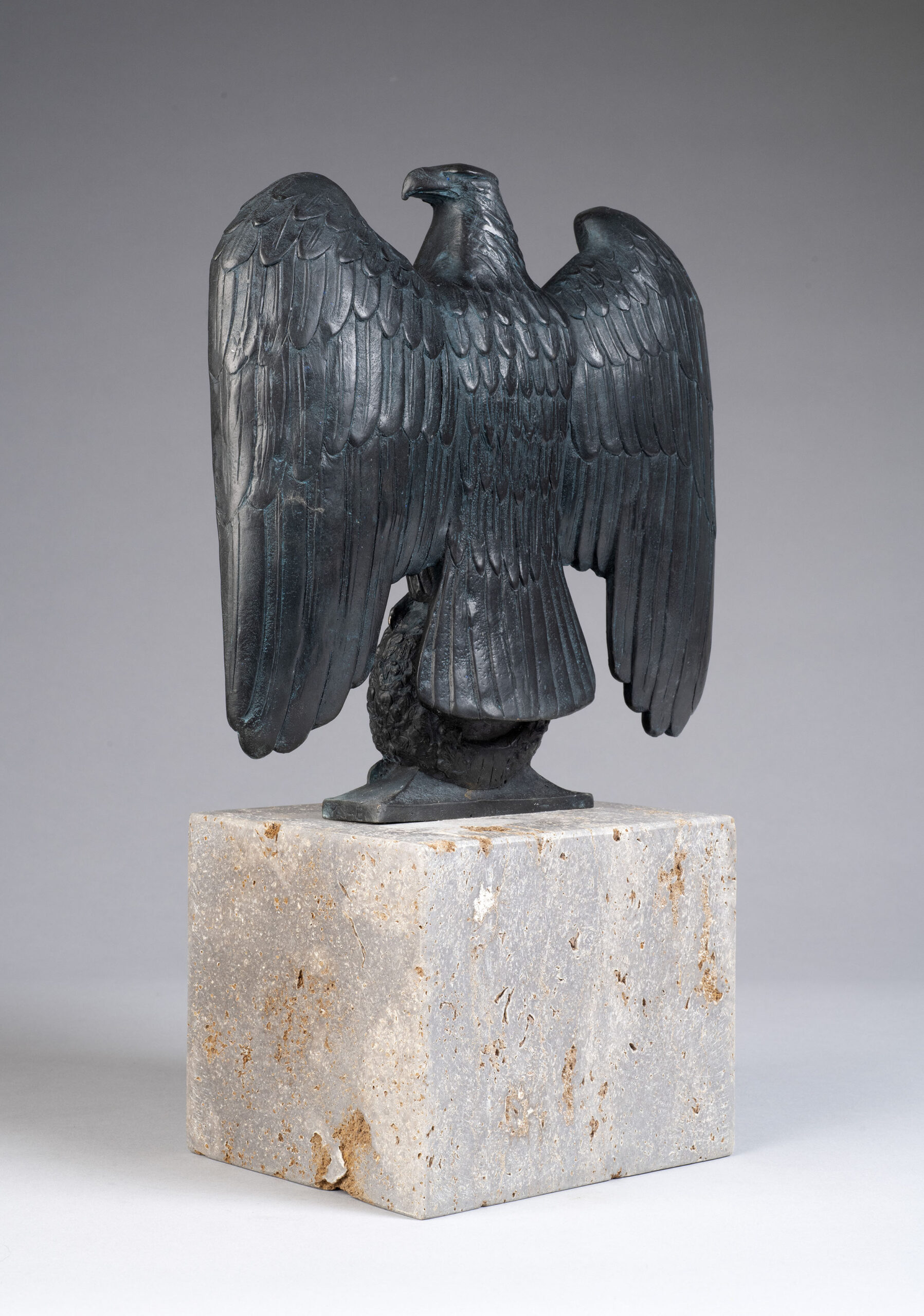
Finely sculpted signature bronze Reichsadler attributed to Dr. Kurt Schmid Ehmen, similar to the monumental work created for the Nazi Party Rally Grounds in Nuremberg. Artist’s signature “K.S – E” (Kurt Schmid – Ehmen) visible on the side of the plinth. This bronze eagle measures 25 x 25.5cm, with a total height of 39cm including the limestone base. This piece is one of about 8 to 10 original casts commissioned by professor Schmid-Ehmen shortly after the war for members of his family, fashioned from the original moulds while they still existed. Of these few original casts, only four, including this example, are confirmed to exist as of today.
Dr. Kurt Schmid-Ehmen (October 23rd, 1901-July 14th, 1968) was a German sculptor born in Saxony. He is known for conceiving the original Nazi Reichsadler, which was used widely by state institutions throughout Germany until 1945. Schmid-Ehmen studied at the Leipzig Academy under Adolf Lehnert, and at the Munich Academy as a master student of Bernhard Bleeker. Schmid-Ehmen’s entry into the NSDAP at the beginning of the 1930’s and his acquaintance with the architect Paul Ludwig Troost brought him into personal contact with Adolf Hitler, marking the beginning of his illustrious career.
Schmid-Ehmen designed the Feldherrnhalle Memorial for the fallen martyrs of Munich Beer Hall Putsch of November 9th 1923, the eagles on the party buildings in Munich, on the Nazi Party Rally Grounds in Nuremberg, as well as the eagle relief for the smoking room and entrance of the New Reich Chancellery. Moreover, Schmid-Ehmen created the largest bronze eagle, measuring 9 meters in height, for the German Pavilion at the 1937 World Exhibition in Paris, for which he was awarded the Grand Prix de la République Française. From 1936 he was a member of the Presidential Council of the Reich Chamber of Fine Arts, and on 30 January 1937 Adolf Hitler appointed him professor. He had previously been appointed a member of the Reich Cultural Senate by Joseph Goebbels in 1935. Furthermore, Schmid-Ehmen was represented at all major German art exhibitions in Munich from 1937 to 1944. In 1937, he was awarded the privilege of exhibiting portrait busts of the Gauleiter (Governor) of Munich-Upper Bavaria Adolf Wagner, the Reich Treasurer of the NSDAP Franz Xavier Schwarz and the Gauleiter of Franconia Julius Streicher, among others. Hitler acquired Schmid-Ehmen’s ‘Female Figure’ statue exhibited in 1938, the ‘Striding Man’ statue in 1940 and the ‘Female Figure’ in 1942. Towards the later years of the regime in 1944, Schmid-Ehmen exhibited the bust of the writer Hans Zöberlein; his work ‘Mädchen mit Zweig’ (Girl with Branch) was exhibited at the exhibition Deutsche Künstler und die SS (Schutzstaffel) 1944 in Salzburg.
Following the end of the Second World War, Schmid-Ehmen recommenced work again in 1948 after a short hiatus, and remained active until his death in 1968.
Free shipping on orders over $50!
- Satisfaction Guaranteed
- No Hassle Refunds
- Secure Payments
Finely sculpted signature bronze Reichsadler attributed to Dr. Kurt Schmid Ehmen, similar to the monumental work created for the Nazi Party Rally Grounds in Nuremberg. Artist’s signature “K.S – E” (Kurt Schmid – Ehmen) visible on the side of the plinth. This bronze eagle measures 25 x 25.5cm, with a total height of 39cm including the limestone base. This piece is one of about 8 to 10 original casts commissioned by professor Schmid-Ehmen shortly after the war for members of his family, fashioned from the original moulds while they still existed. Of these few original casts, only four, including this example, are confirmed to exist as of today.
Dr. Kurt Schmid-Ehmen (October 23rd, 1901-July 14th, 1968) was a German sculptor born in Saxony. He is known for conceiving the original Nazi Reichsadler, which was used widely by state institutions throughout Germany until 1945. Schmid-Ehmen studied at the Leipzig Academy under Adolf Lehnert, and at the Munich Academy as a master student of Bernhard Bleeker. Schmid-Ehmen’s entry into the NSDAP at the beginning of the 1930’s and his acquaintance with the architect Paul Ludwig Troost brought him into personal contact with Adolf Hitler, marking the beginning of his illustrious career.
Schmid-Ehmen designed the Feldherrnhalle Memorial for the fallen martyrs of Munich Beer Hall Putsch of November 9th 1923, the eagles on the party buildings in Munich, on the Nazi Party Rally Grounds in Nuremberg, as well as the eagle relief for the smoking room and entrance of the New Reich Chancellery. Moreover, Schmid-Ehmen created the largest bronze eagle, measuring 9 meters in height, for the German Pavilion at the 1937 World Exhibition in Paris, for which he was awarded the Grand Prix de la République Française. From 1936 he was a member of the Presidential Council of the Reich Chamber of Fine Arts, and on 30 January 1937 Adolf Hitler appointed him professor. He had previously been appointed a member of the Reich Cultural Senate by Joseph Goebbels in 1935. Furthermore, Schmid-Ehmen was represented at all major German art exhibitions in Munich from 1937 to 1944. In 1937, he was awarded the privilege of exhibiting portrait busts of the Gauleiter (Governor) of Munich-Upper Bavaria Adolf Wagner, the Reich Treasurer of the NSDAP Franz Xavier Schwarz and the Gauleiter of Franconia Julius Streicher, among others. Hitler acquired Schmid-Ehmen’s ‘Female Figure’ statue exhibited in 1938, the ‘Striding Man’ statue in 1940 and the ‘Female Figure’ in 1942. Towards the later years of the regime in 1944, Schmid-Ehmen exhibited the bust of the writer Hans Zöberlein; his work ‘Mädchen mit Zweig’ (Girl with Branch) was exhibited at the exhibition Deutsche Künstler und die SS (Schutzstaffel) 1944 in Salzburg.
Following the end of the Second World War, Schmid-Ehmen recommenced work again in 1948 after a short hiatus, and remained active until his death in 1968.