Struggle, Independence, Unity
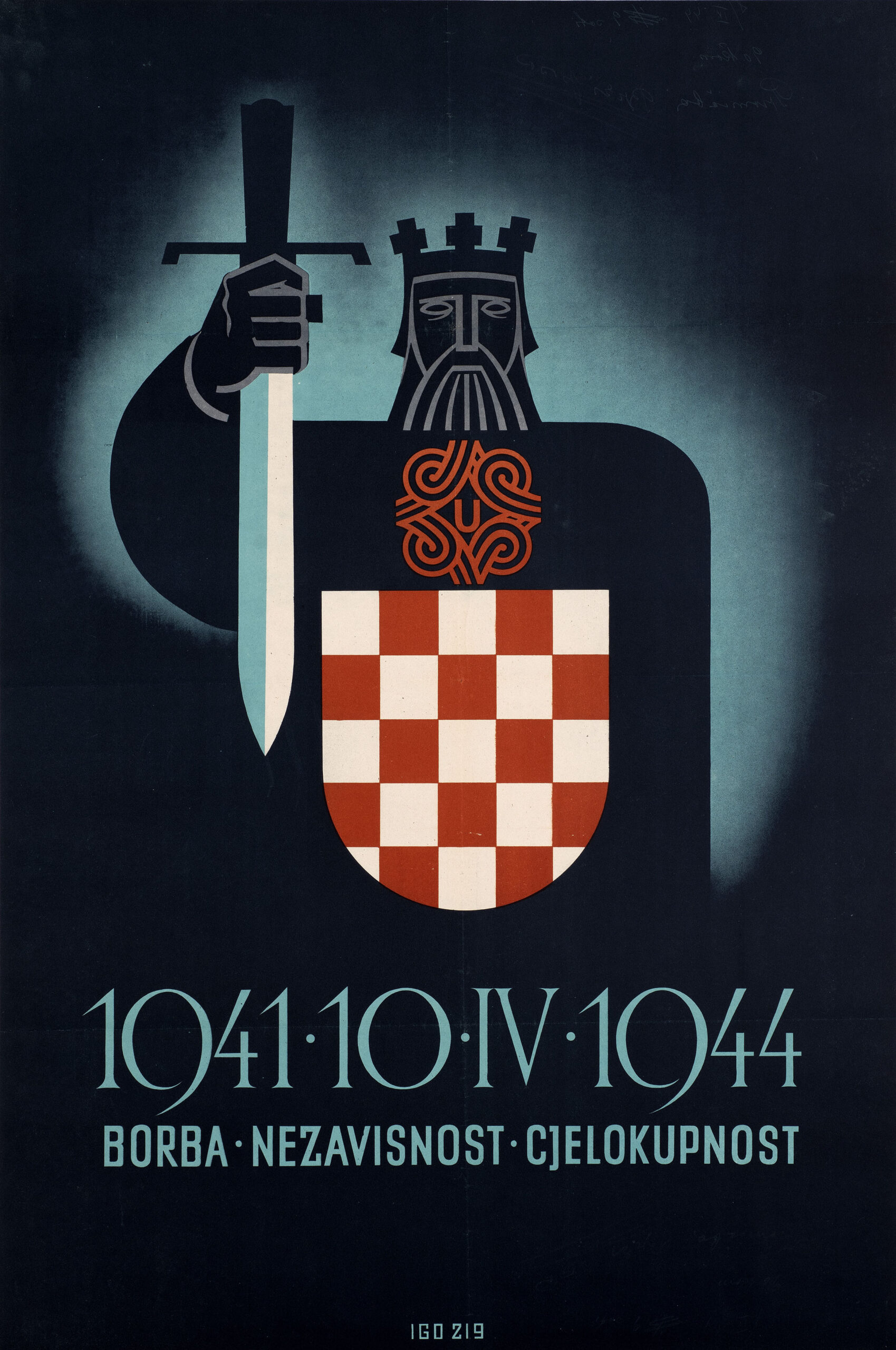
Propaganda poster c. 1944 celebrating the establishment of the Independent State of Croatia (NDH) led by the fascist Ustaše. An ethereal nimbus of light surrounds a king bearing the insignia of the Ustaše. Modern rendition of traditional medieval imagery typical of the era. Such juxtaposition of old and new is integral to fascist philosophy and a common technique utilized in its aesthetic; it is derived from the concept of ‘palingenesis’, meaning the rebirth of a nation with ancestral characteristics. In this instance, the imagery draws a parallel between the unquestionable authority of the Ustaše and the royal authority of the ancient Croatian kings, both as powers considered divinely ordained. The messaging at the bottom extolls Croatia’s national struggle for independence and the subsequent unity of its people.
Croatia was liberated from Yugoslavia by the Axis powers in 1941, in a swift campaign that lasted 2 weeks. It was thus that the Independent State of Croatia was established as a condominium under German and Italian auspices, headed by Ante Pavelic of the fascist Ustaše party. The Ustaše sought to carry out a national revolution, promising extensive social and economic policy changes. A new economic system heavily influenced by corporatism known as “Croatian Socialism” was espoused by Ustaše theoretician Aleksandar Seitz. This idea was opposed to both communism and capitalism and “attempted to create a psychic unity among the peasant in the village, the worker in the town, intellectuals in garrets, white-collar workers in offices, and warriors on the battlefield” (Rory, 2012). Seitz declared that the aim was to bring together all classes and estates to work for the national community; this national community was held to be a concept opposed to both Marxists and capitalists, because “the former knew only of classes, while the latter recognized only free markets.” The desire to build a Croatian national community was seen as a part of a broader European national revolution that was opposed to the ideologies of the United States and the Soviet Union, two forces accused of seeking the “leveling of all human cultures” (Nevenko, 2013).
The new Croatian regime was notable for their excessive brutality that managed to appall even the Germans. Military attache Edmund Glaise-Horstenau stated of their conduct:
“I am frequently told that German occupation troops would have to intervene against Ustaše crimes…I saw in the Sava River the corpse of a young woman with her eyes dug out and a stake driven into her sexual parts. This woman was at most twenty years old when she fell into the hands of these monsters. All around, pigs devoured unburied human beings.”
Even the dreaded Gestapo were not sympathetic to this wanton violence, with a 1942 report to Heinrich Himmler reading:
“Increased activity of the partisans is chiefly due to atrocities carried out by Ustaše units in Croatia against the Orthodox population. The Ustaše committed their deeds in a bestial manner not only against males of conscript age, but especially against helpless old people, women and children. The number of the Orthodox that the Croats have massacred and sadistically tortured to death is about three hundred thousand.”
The genocidal campaign against the minority Serbian population was pursued through particularly primitive and barbaric means that made the infamous German concentration camps appear comparatively humane. These Croatian counterparts specialized in brutal one-on-one violence and wanton torture that employed blades and blunt weapons as the primary method of dispatching inmates.
Further yet, the Ustaše rejoiced in these atrocities, allegedly wearing necklaces of human eyes and tongues removed from their Serb victims. Ustaše commander-in-chief Vjekoslav Luburić stated proudly that “We have slaughtered here at Jasenovac [Croatia’s foremost concentration camp] more people than the Ottoman Empire was able to do during its occupation of Europe.”
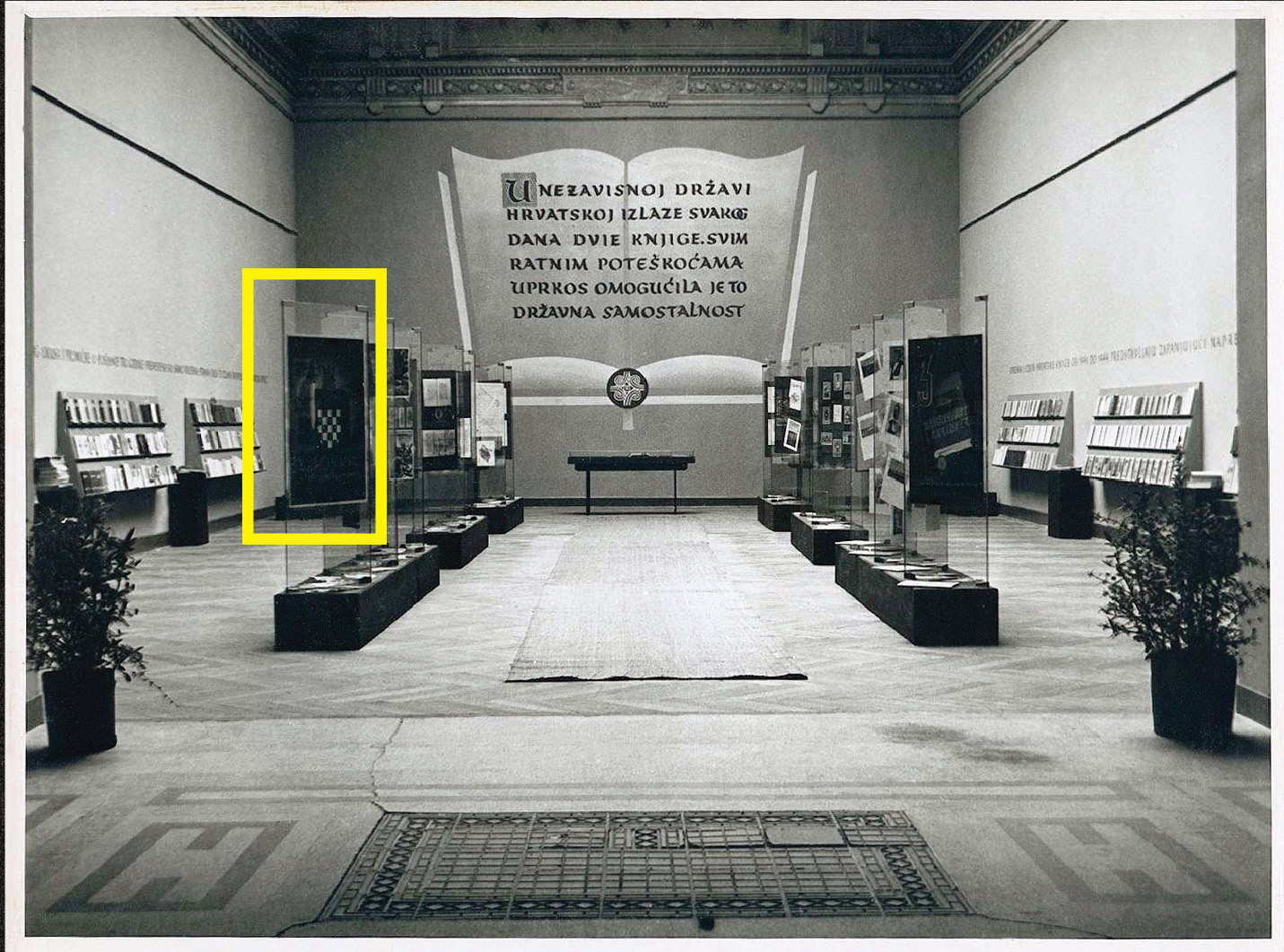
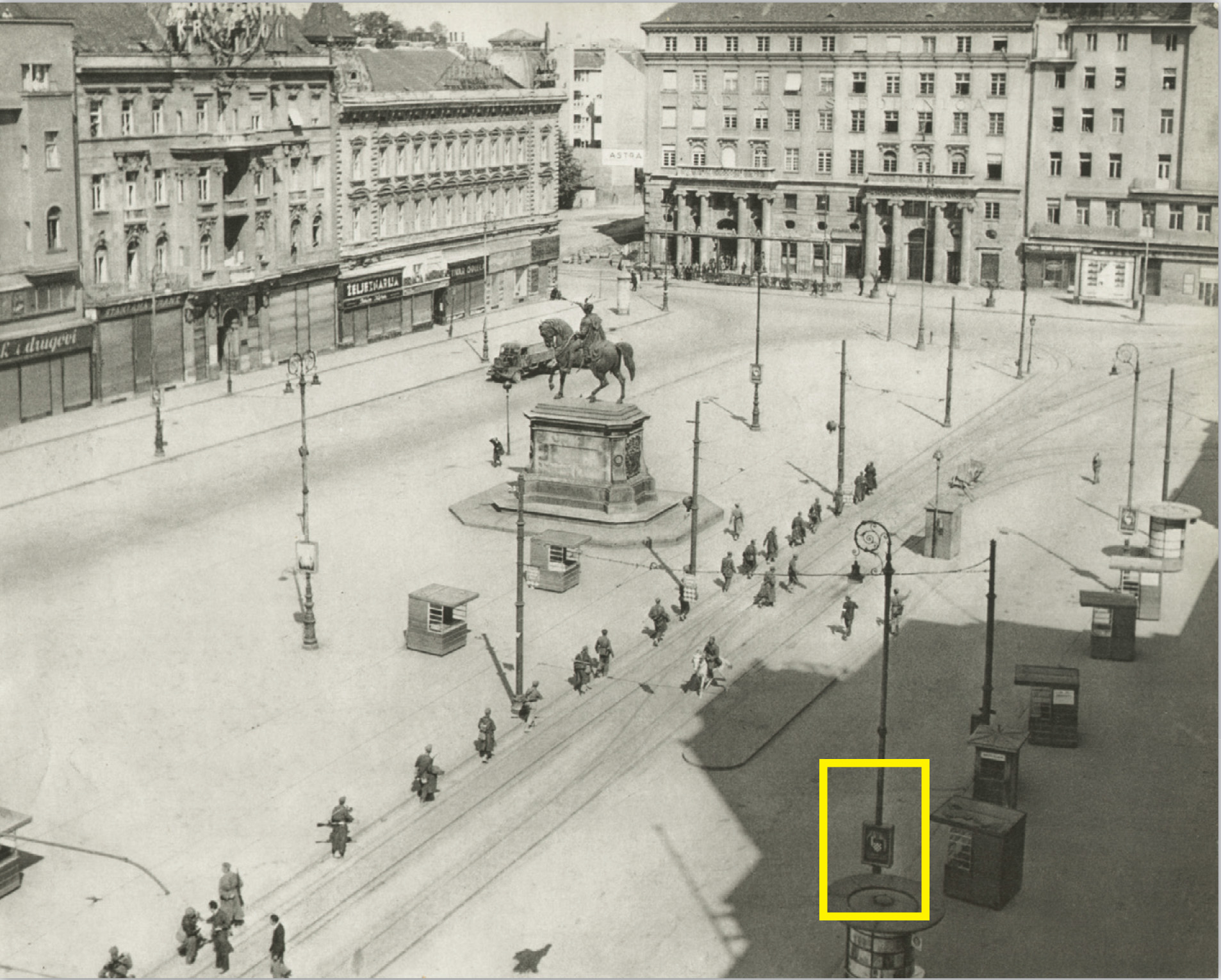
Second image shows our poster being exhibited at a Croatian state art exposition, while the third image shows Yugoslav partisans entering Zagreb in 1945 with the same Ustaše poster still displayed on a lamp post.
Sources:
Yeomans, Rory (2012). Visions of Annihilation: The Ustasha Regime and the Cultural Politics of Fascism, 1941–1945, p. 196
Bartulin, Nevenko (2013). Honorary Aryans: National-Racial Identity and Protected Jews in the Independent State of Croatia, Palgrave Macmillan, p. 63
Free shipping on orders over $50!
- Satisfaction Guaranteed
- No Hassle Refunds
- Secure Payments
Propaganda poster c. 1944 celebrating the establishment of the Independent State of Croatia (NDH) led by the fascist Ustaše. An ethereal nimbus of light surrounds a king bearing the insignia of the Ustaše. Modern rendition of traditional medieval imagery typical of the era. Such juxtaposition of old and new is integral to fascist philosophy and a common technique utilized in its aesthetic; it is derived from the concept of ‘palingenesis’, meaning the rebirth of a nation with ancestral characteristics. In this instance, the imagery draws a parallel between the unquestionable authority of the Ustaše and the royal authority of the ancient Croatian kings, both as powers considered divinely ordained. The messaging at the bottom extolls Croatia’s national struggle for independence and the subsequent unity of its people.
Croatia was liberated from Yugoslavia by the Axis powers in 1941, in a swift campaign that lasted 2 weeks. It was thus that the Independent State of Croatia was established as a condominium under German and Italian auspices, headed by Ante Pavelic of the fascist Ustaše party. The Ustaše sought to carry out a national revolution, promising extensive social and economic policy changes. A new economic system heavily influenced by corporatism known as “Croatian Socialism” was espoused by Ustaše theoretician Aleksandar Seitz. This idea was opposed to both communism and capitalism and “attempted to create a psychic unity among the peasant in the village, the worker in the town, intellectuals in garrets, white-collar workers in offices, and warriors on the battlefield” (Rory, 2012). Seitz declared that the aim was to bring together all classes and estates to work for the national community; this national community was held to be a concept opposed to both Marxists and capitalists, because “the former knew only of classes, while the latter recognized only free markets.” The desire to build a Croatian national community was seen as a part of a broader European national revolution that was opposed to the ideologies of the United States and the Soviet Union, two forces accused of seeking the “leveling of all human cultures” (Nevenko, 2013).
The new Croatian regime was notable for their excessive brutality that managed to appall even the Germans. Military attache Edmund Glaise-Horstenau stated of their conduct:
“I am frequently told that German occupation troops would have to intervene against Ustaše crimes…I saw in the Sava River the corpse of a young woman with her eyes dug out and a stake driven into her sexual parts. This woman was at most twenty years old when she fell into the hands of these monsters. All around, pigs devoured unburied human beings.”
Even the dreaded Gestapo were not sympathetic to this wanton violence, with a 1942 report to Heinrich Himmler reading:
“Increased activity of the partisans is chiefly due to atrocities carried out by Ustaše units in Croatia against the Orthodox population. The Ustaše committed their deeds in a bestial manner not only against males of conscript age, but especially against helpless old people, women and children. The number of the Orthodox that the Croats have massacred and sadistically tortured to death is about three hundred thousand.”
The genocidal campaign against the minority Serbian population was pursued through particularly primitive and barbaric means that made the infamous German concentration camps appear comparatively humane. These Croatian counterparts specialized in brutal one-on-one violence and wanton torture that employed blades and blunt weapons as the primary method of dispatching inmates.
Further yet, the Ustaše rejoiced in these atrocities, allegedly wearing necklaces of human eyes and tongues removed from their Serb victims. Ustaše commander-in-chief Vjekoslav Luburić stated proudly that “We have slaughtered here at Jasenovac [Croatia’s foremost concentration camp] more people than the Ottoman Empire was able to do during its occupation of Europe.”
Second image shows our poster being exhibited at a Croatian state art exposition, while the third image shows Yugoslav partisans entering Zagreb in 1945 with the same Ustaše poster still displayed on a lamp post.
Sources:
Yeomans, Rory (2012). Visions of Annihilation: The Ustasha Regime and the Cultural Politics of Fascism, 1941–1945, p. 196
Bartulin, Nevenko (2013). Honorary Aryans: National-Racial Identity and Protected Jews in the Independent State of Croatia, Palgrave Macmillan, p. 63