SS Volunteer Legion Flanders Uniform
Original service uniform of the SS-Freiwilligen Legion Flandern (SS Volunteer Legion Flanders), and amongst the few authentic examples remaining in existence as of today. The Flemish lion, the national emblem of Flanders derived from medieval heraldry, is visible above the unit’s cuff title (Ärmelstreifen), serving as a tribute to the legion’s homeland. This particular example is paired with its original Waffen-SS garrison cap and was worn by a Flemish SS-Untersturmführer who was decorated with an Iron Cross 1st and 2nd Class.
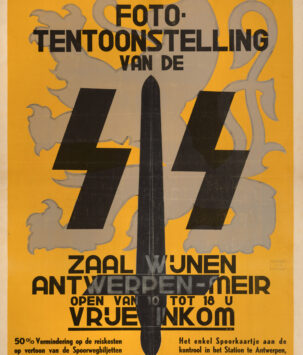
The SS-Freiwilligen Legion Flandern was a unit within the Waffen-SS composed of Flemish volunteers, originally conceived as the Flemish Legion (Vlaams Legioen) in 1941. Upon entering service with the Waffen-SS, it was designated the SS Volunteer Legion Flanders to emphasize that its voluntary character, with its men not being ordinary conscripts but individuals who chose to stand with Germany in the great struggle for Europe’s future. The designation lent these men honor and prestige, portraying them as ideological comrades-in-arms rather than as reluctant soldiers. It was renamed again as the SS Assault Brigade Langemarck (SS-Sturmbrigade Langemarck) in 1943. Enlisting for a variety of personal and political convictions, these Flemings were deployed on the Eastern Front under German command, where they were noted for their exceptional combat prowess, tenacity and valor in the face of the relentless Soviet onslaught, which many saw as reflecting the national character of Flanders.
The Flemish have long-existed as second-class citizens within their home country of Belgium. Their government, dominated by the French-speaking Walloons, was perceived as dictatorial and corrupt by the Dutch-speaking Flemings. Both the Dutch language and acts of Flemish cultural expression were suppressed, and the preferential treatment of French was used by the dominant Walloons to maintain effective control over the entire nation, despite them making up a minority of the overall population. As a result, many Flemings saw the German occupation of 1940 as an opportunity to reaffirm their independence from the Belgian state through political and military participation. In his book The Last Knight of Flanders, author and Flemish SS volunteer Remy Schrijnen states of public perception towards Germany during the occupation:
“…many Flemings had come to admire the discipline of the German soldiers and had found them to be polite and respectful of the Flemish culture. Indeed, as during any occupation, there were several incidents of civil crimes committed by German soldiers against the population. But these acts were illegal and the German occupation authorities dealt with them harshly. German soldiers convicted of such crimes were, depending on the incident, publicly executed. This only served to strengthen German support. By the end of November, some 80% of the Flemish population considered themselves friendly to the Germans. It should also be stressed that 90% of the entire Belgian population believed in a final German victory.”
In addition, many Europeans at the time, including in Flanders, feared communist encroachment upon the continent, perceiving the Soviet Union to be an existential threat to European civilization that far outweighed Nazi Germany. Many thus saw Germany’s fight in the East as their own, believing it to be their patriotic duty to partake in a war that would determine the collective fate of Europe and Flanders alike.
This resulted in many Flemings enlisting in the Schutzstaffel (SS), Wehrmacht and other German organizations, believing participating in this final victory would grant them political representation in the hypothesized, post-war National Socialist order. It was thus that a Flemish Legion of idealists, political activists and adventurers formed around a cadre of German and Austrian officers, and were thrust into the maelstrom of the Eastern Front.
Initially, the young Flemings were despised by the Germans who considered them unworthy of membership in any German army unit, let alone the Waffen-SS. An inspection regarding their supposed poor treatment was eventually conducted by a high-ranking SS official, who filed a formal complaint with Reichsführer-SS Heinrich Himmler. In response, Himmler dictated that all Germans serving with the Flemish Legion would be required to take a course on Flemish culture, with any act of prejudice towards the Flemings strictly forbidden and to be dealt with harshly (Schrijnen, 1998).
Throughout their service, the Flemish legionnaires would continue proving themselves to be “not only loyal and formidable soldiers, but more importantly a tightly-knit group bound in camaraderie”, according to Schrijnen. By the end of the fierce battles of 1943, they had earned a reputation amongst their German comrades who commended them for being exceptionally reliable and tenacious, standing out amongst their Dutch and Walloon counterparts in the foreign SS. Adolf Hitler himself is said to have stated of the Flemings that they “have indeed shown themselves on the Eastern Front to be more pro-German and more ruthless than the Dutch legionaries”.
The unit underwent a final redesignation as the 27th SS Volunteer Grenadier Division Langemarck. By reviving the word Grenadier, the SS linked their modern infantry formations to the elite shock troops of Europe’s martial golden age. A Fleming wearing the title of “grenadier” could take pride in being part of an honored soldiering tradition that stretches back to the guards of Napoleon and Frederick the Great. The Flemish Grenadiers fought until the very end of the war, partaking in some of the most catastrophic battles on the Eastern Front while enduring appalling casualties. With nowhere left to turn, our heroes finally surrendered to the Red Army in Mecklenburg on May 8th, 1945.
Sources:
Schrijnen, Remy. (1998). The Last Knight of Flanders.
Free shipping on orders over $50!
- Satisfaction Guaranteed
- No Hassle Refunds
- Secure Payments
Original service uniform of the SS-Freiwilligen Legion Flandern (SS Volunteer Legion Flanders), and amongst the few authentic examples remaining in existence as of today. The Flemish lion, the national emblem of Flanders derived from medieval heraldry, is visible above the unit’s cuff title (Ärmelstreifen), serving as a tribute to the legion’s homeland. This particular example is paired with its original Waffen-SS garrison cap and was worn by a Flemish SS-Untersturmführer who was decorated with an Iron Cross 1st and 2nd Class.
The SS-Freiwilligen Legion Flandern was a unit within the Waffen-SS composed of Flemish volunteers, originally conceived as the Flemish Legion (Vlaams Legioen) in 1941. Upon entering service with the Waffen-SS, it was designated the SS Volunteer Legion Flanders to emphasize that its voluntary character, with its men not being ordinary conscripts but individuals who chose to stand with Germany in the great struggle for Europe’s future. The designation lent these men honor and prestige, portraying them as ideological comrades-in-arms rather than as reluctant soldiers. It was renamed again as the SS Assault Brigade Langemarck (SS-Sturmbrigade Langemarck) in 1943. Enlisting for a variety of personal and political convictions, these Flemings were deployed on the Eastern Front under German command, where they were noted for their exceptional combat prowess, tenacity and valor in the face of the relentless Soviet onslaught, which many saw as reflecting the national character of Flanders.
The Flemish have long-existed as second-class citizens within their home country of Belgium. Their government, dominated by the French-speaking Walloons, was perceived as dictatorial and corrupt by the Dutch-speaking Flemings. Both the Dutch language and acts of Flemish cultural expression were suppressed, and the preferential treatment of French was used by the dominant Walloons to maintain effective control over the entire nation, despite them making up a minority of the overall population. As a result, many Flemings saw the German occupation of 1940 as an opportunity to reaffirm their independence from the Belgian state through political and military participation. In his book The Last Knight of Flanders, author and Flemish SS volunteer Remy Schrijnen states of public perception towards Germany during the occupation:
“…many Flemings had come to admire the discipline of the German soldiers and had found them to be polite and respectful of the Flemish culture. Indeed, as during any occupation, there were several incidents of civil crimes committed by German soldiers against the population. But these acts were illegal and the German occupation authorities dealt with them harshly. German soldiers convicted of such crimes were, depending on the incident, publicly executed. This only served to strengthen German support. By the end of November, some 80% of the Flemish population considered themselves friendly to the Germans. It should also be stressed that 90% of the entire Belgian population believed in a final German victory.”
In addition, many Europeans at the time, including in Flanders, feared communist encroachment upon the continent, perceiving the Soviet Union to be an existential threat to European civilization that far outweighed Nazi Germany. Many thus saw Germany’s fight in the East as their own, believing it to be their patriotic duty to partake in a war that would determine the collective fate of Europe and Flanders alike.
This resulted in many Flemings enlisting in the Schutzstaffel (SS), Wehrmacht and other German organizations, believing participating in this final victory would grant them political representation in the hypothesized, post-war National Socialist order. It was thus that a Flemish Legion of idealists, political activists and adventurers formed around a cadre of German and Austrian officers, and were thrust into the maelstrom of the Eastern Front.
Initially, the young Flemings were despised by the Germans who considered them unworthy of membership in any German army unit, let alone the Waffen-SS. An inspection regarding their supposed poor treatment was eventually conducted by a high-ranking SS official, who filed a formal complaint with Reichsführer-SS Heinrich Himmler. In response, Himmler dictated that all Germans serving with the Flemish Legion would be required to take a course on Flemish culture, with any act of prejudice towards the Flemings strictly forbidden and to be dealt with harshly (Schrijnen, 1998).
Throughout their service, the Flemish legionnaires would continue proving themselves to be “not only loyal and formidable soldiers, but more importantly a tightly-knit group bound in camaraderie”, according to Schrijnen. By the end of the fierce battles of 1943, they had earned a reputation amongst their German comrades who commended them for being exceptionally reliable and tenacious, standing out amongst their Dutch and Walloon counterparts in the foreign SS. Adolf Hitler himself is said to have stated of the Flemings that they “have indeed shown themselves on the Eastern Front to be more pro-German and more ruthless than the Dutch legionaries”.
The unit underwent a final redesignation as the 27th SS Volunteer Grenadier Division Langemarck. By reviving the word Grenadier, the SS linked their modern infantry formations to the elite shock troops of Europe’s martial golden age. A Fleming wearing the title of “grenadier” could take pride in being part of an honored soldiering tradition that stretches back to the guards of Napoleon and Frederick the Great. The Flemish Grenadiers fought until the very end of the war, partaking in some of the most catastrophic battles on the Eastern Front while enduring appalling casualties. With nowhere left to turn, our heroes finally surrendered to the Red Army in Mecklenburg on May 8th, 1945.
Sources:
Schrijnen, Remy. (1998). The Last Knight of Flanders.